
Moscow and Novgorod Icon Schools: Regional Diversity in Icon Painting
The history of Russian icon painting is shaped by remarkable regional diversity, with the Moscow and Novgorod icon schools standing out as two of its most influential traditions. Political fragmentation and the rise of regional cultural centers after the Mongol invasions, however, encouraged the flourishing of distinctive local styles. Among them, the Moscow and Novgorod schools became prominent, each creating a unique visual language that continues to attract the attention of scholars, museums, and collectors today.
Although both schools were deeply influenced by Byzantine icon painting, they evolved in different historical and cultural environments, resulting in noticeably different artistic approaches.
The Novgorod School
The Novgorod icon school emerged in the 12th century and flourished until the 16th century, reaching its peak between the 13th and 15th centuries. Its success was largely due to Novgorod’s relative independence from Mongol rule and the city’s merchant-republic culture, which encouraged locally inspired artistic tradition.
Novgorod icon painters respected Byzantine conventions while adapting them to regional tastes and available materials. Their works are characterized by bold, saturated colors, especially vivid reds and whites, with cinnabar backgrounds frequently appearing in icons.
The compositions are typically simple and graphic, featuring strong outlines, flattened perspectives, and the stylized and two-dimensional nature of their images. Rather than emphasizing naturalism, Novgorod artists focused on expressive graphics and dynamic rhythm.
Among the best-known surviving examples are “The Battle of the Novgorodians with the Suzdalians” from the Novgorod Museum-Reserve and “Miracle of Saint George and the Dragon” from the State Russian Museum.
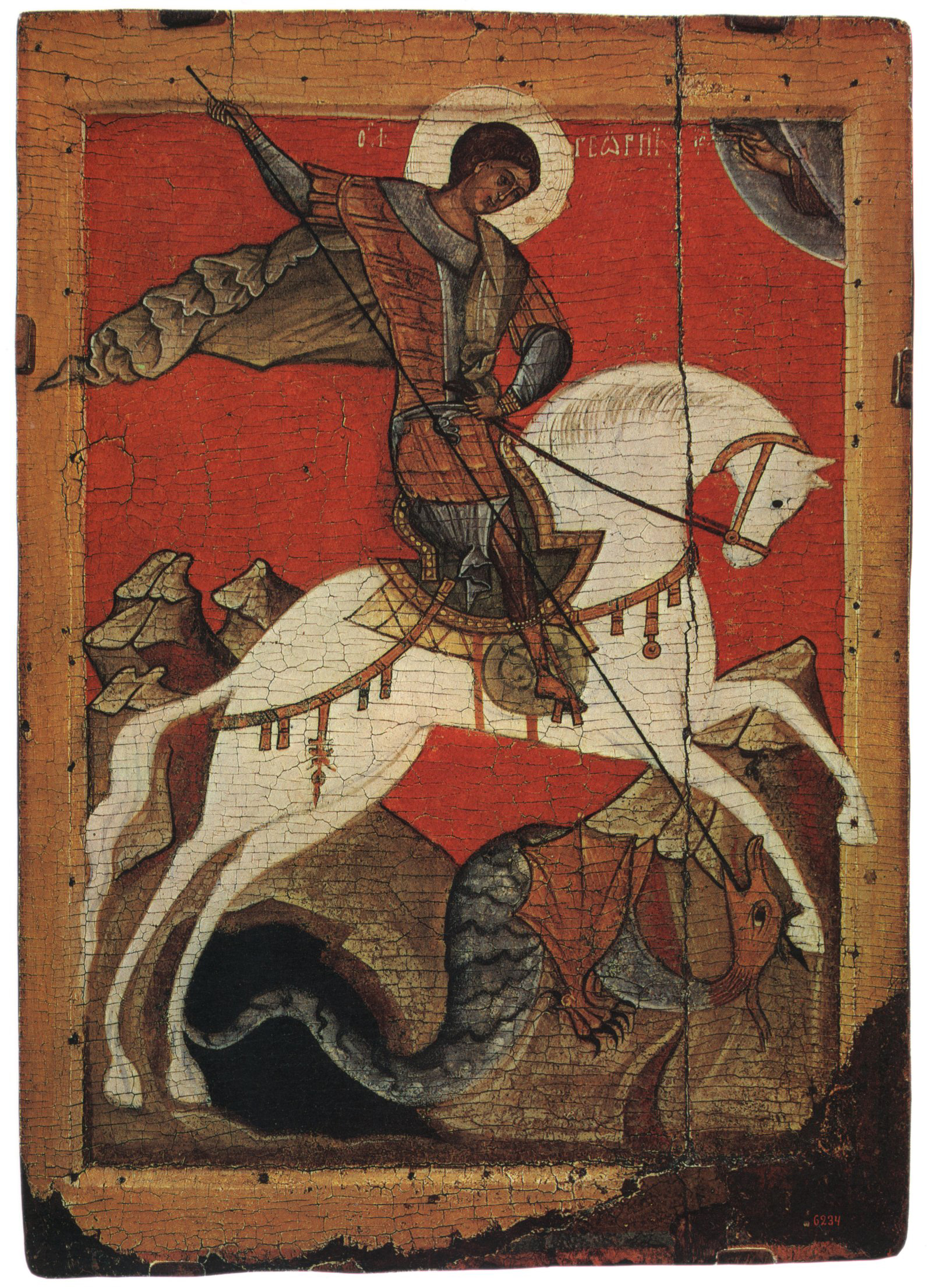
Miracle of Saint George and the Dragon. Novgorod. Second half of the 15th century. The State Russian Museum.
The Moscow School
Moscow’s icon-painting workshops rose to prominence during the 14th–16th centuries as the city became the country’s political and spiritual center. The Moscow school combined Byzantine, Novgorodian, and Balkan artistic influences into a refined and highly recognizable style.
Compared to Novgorod icons, Moscow works feature elongated figures, softer modeling, harmonious color palettes based on subtle tints, and greater emotional nuance in the faces of saints.
The leading masters associated with this school include Andrei Rublev, Theophanes the Greek, and Dionisius, whose works became benchmarks for later generations of icon painters.
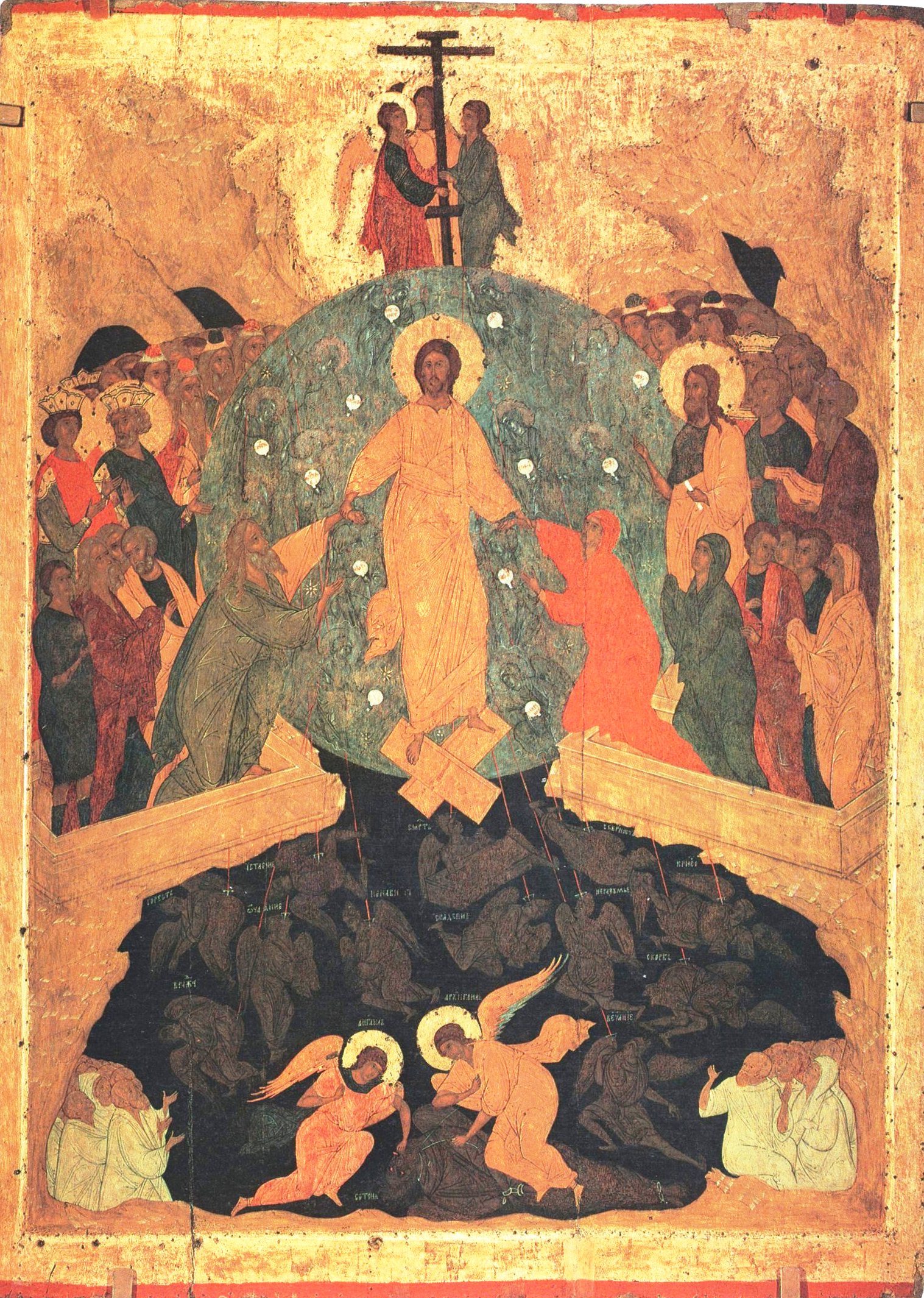
Dionisius and workshop. Descent into Hell. 1502–1503. The State Russian Museum.
The Lasting Legacy of the Moscow and Novgorod Icon Schools
The Moscow and Novgorod icon schools continue to shape the study and appreciation of Russian religious art. While the Novgorod tradition is admired for its bold, expressive character, the Moscow school is celebrated for its elegance and spiritual refinement.
These two schools represent only part of Russia’s rich iconographic heritage. Modern scholarship also highlights icons of other regional traditions and historical periods preserved in private collections, including Oleg Kushnirskiy’s renowned Old Believer icon collection, whose published catalog has brought renewed international attention to the diversity and artistic value of Russian icon painting.