
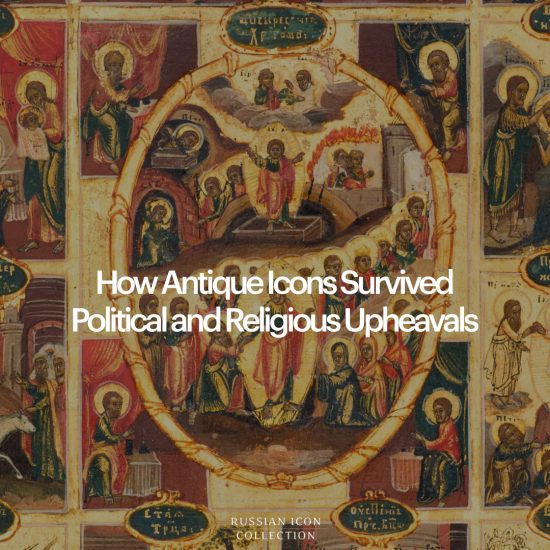
How Antique Icons Survived Political and Religious Upheavals
Few objects in sacred art history have endured as much as Russian icons. Many antique icons survived wars, fires, revolutions, and deliberate destruction during the Bolshevik and Soviet eras. Their remarkable stories of survival continue to inspire modern efforts to preserve and study religious art.
The Kazan Icon of the Mother of God
One of the most famous survival stories is that of the Kazan Icon of the Mother of God. According to tradition, it was discovered in 1579 by a young girl named Matrona after the icon revealed its location in a vision. The icon became one of Russia’s most revered religious images, accompanying the Russian army during key historical events, including the liberation of Moscow in 1612 and the campaign against Napoleon in 1812.
The fate of the original Kazan Icon of the Mother of God was tragic. In the early 20th century, it was stolen and widely believed to have been destroyed.
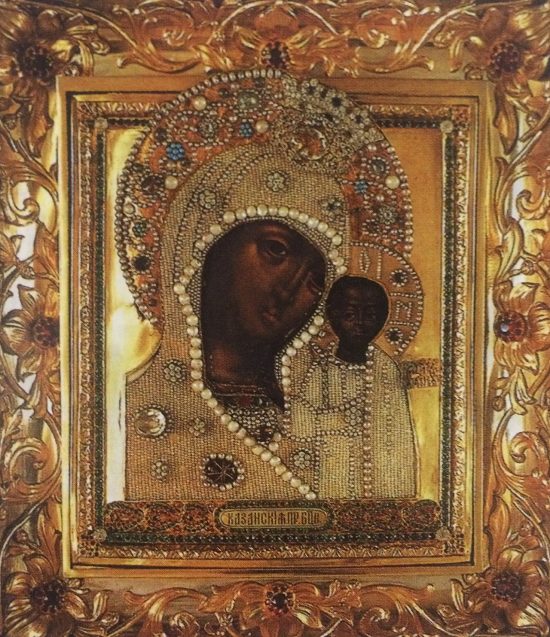
The Kazan Icon of the Mother of God (replica of the original icon) in the Yelokhovsky Cathedral in Moscow.
The Soviet Campaign Against Icons
The Soviet period produced some of the most dramatic chapters in the history of antique icons. During the 1920s and 1930s, the Bolshevik government launched an aggressive anti-religious campaign. Thousands of icons were confiscated, burned, repurposed, sold abroad, or hidden from public view.
Many surviving artworks escaped destruction thanks to museum professionals, collectors, and local communities. Some icons were quietly reclassified as historical artifacts rather than religious objects, allowing them to remain protected in museum collections until attitudes toward religious heritage changed.
Old Believer Icons and Religious Persecution
Another important chapter in icon preservation is connected to Old Believers. After Patriarch Nikon’s reforms in the 17th century, many Orthodox Christians rejected the changes and continued to follow older religious traditions. As a result, they faced persecution and were forced to relocate to remote regions of Russia.
Despite these hardships, Old Believer communities preserved their artistic heritage and established icon-painting centers in places such as Palekh, Mstyora, and Kholuy. Their workshops became guardians of traditional iconography that might otherwise have disappeared. These workshops ensured that ancient icons and traditions were preserved for centuries, despite the transformation of Russian religious art under the influence of Western European painting trends.
Those interested in learning more about this remarkable artistic legacy can explore the Russian icon catalog from Oleg Kushnirskiy’s collection, available for purchase on our website. The publication offers valuable insights into Old Believer iconography and the enduring history of Russian religious art.