
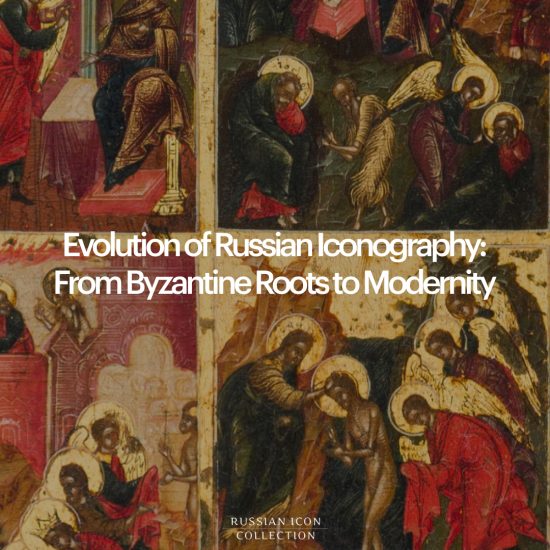
Evolution of Russian Iconography: From Byzantine Roots to Modernity
The evolution of Russian iconography reflects more than a thousand years of artistic, religious, and cultural development. Since the Christianization of Kyivan Rus by Prince Vladimir in 988 AD, icon painting has continuously adapted to changing political, theological, and artistic influences while preserving its central role in Orthodox tradition. Every historical period introduced new visual styles, regional schools, and spiritual interpretations, creating one of the richest iconographic traditions in the world.
Key Stages in the Evolution of Russian Iconography
Pre-Mongol Foundations
The earliest Russian icons closely followed Byzantine artistic traditions brought by Greek masters. Characterized by solemn compositions, elongated figures, restrained color palettes, and strong theological symbolism, these icons established the visual language that would shape Russian religious art for centuries. During this period, anonymous icon painters worked primarily in Kyiv and Novgorod, producing panel icons alongside monumental frescoes and mosaics for newly built churches.
Novgorod and Pskov Schools
Following the Mongol invasion, Novgorod and Pskov became major artistic centers. Their relative independence encouraged the development of distinctive regional styles featuring vivid colors, expressive outlines, simplified forms, and greater decorative freedom. These workshops gradually transformed Byzantine traditions into a recognizable Russian artistic language while maintaining strict theological principles.
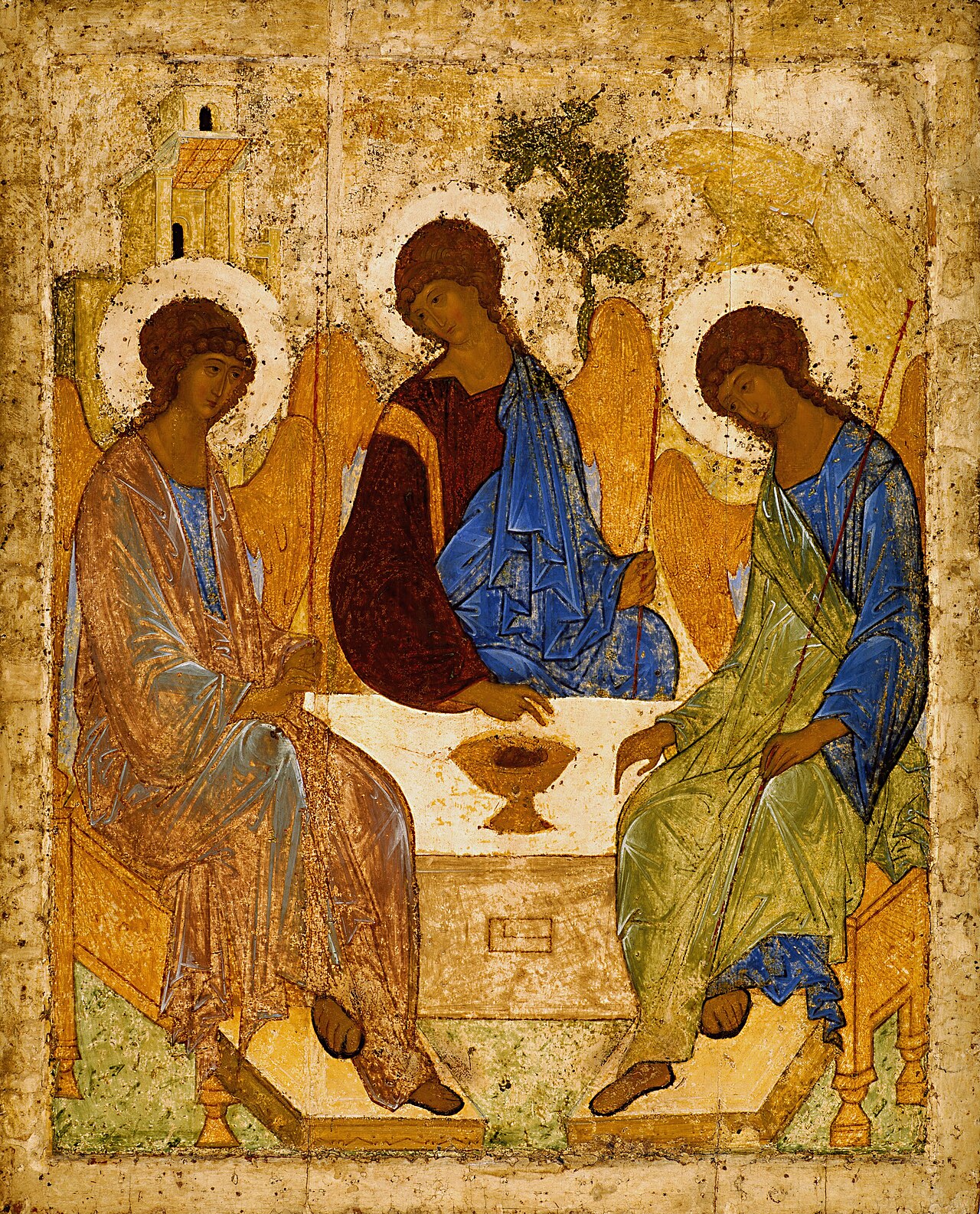
Andrei Rublev. The Holy Trinity. 1412 or the 1420s.
The Rise of the Moscow School
The 14th and 15th centuries marked a golden age in the evolution of Russian iconography. As Moscow emerged as the political and spiritual center of Russia, its icon painters refined Byzantine models into a softer and more emotionally expressive style. Masters such as Andrei Rublev introduced remarkable psychological depth, balanced compositions, and harmonious color relationships that continue to define classical Russian icon painting.
The Stroganov School
During the late 16th century, wealthy patrons from the Stroganov family commissioned miniature icons intended for private devotion. Distinguished by refined craftsmanship, intricate ornamentation, delicate brushwork, and luxurious gold backgrounds, these works elevated icon painting to an exceptional level of technical sophistication. Leading masters of this tradition included Prokopy Chirin and Istoma Savin.
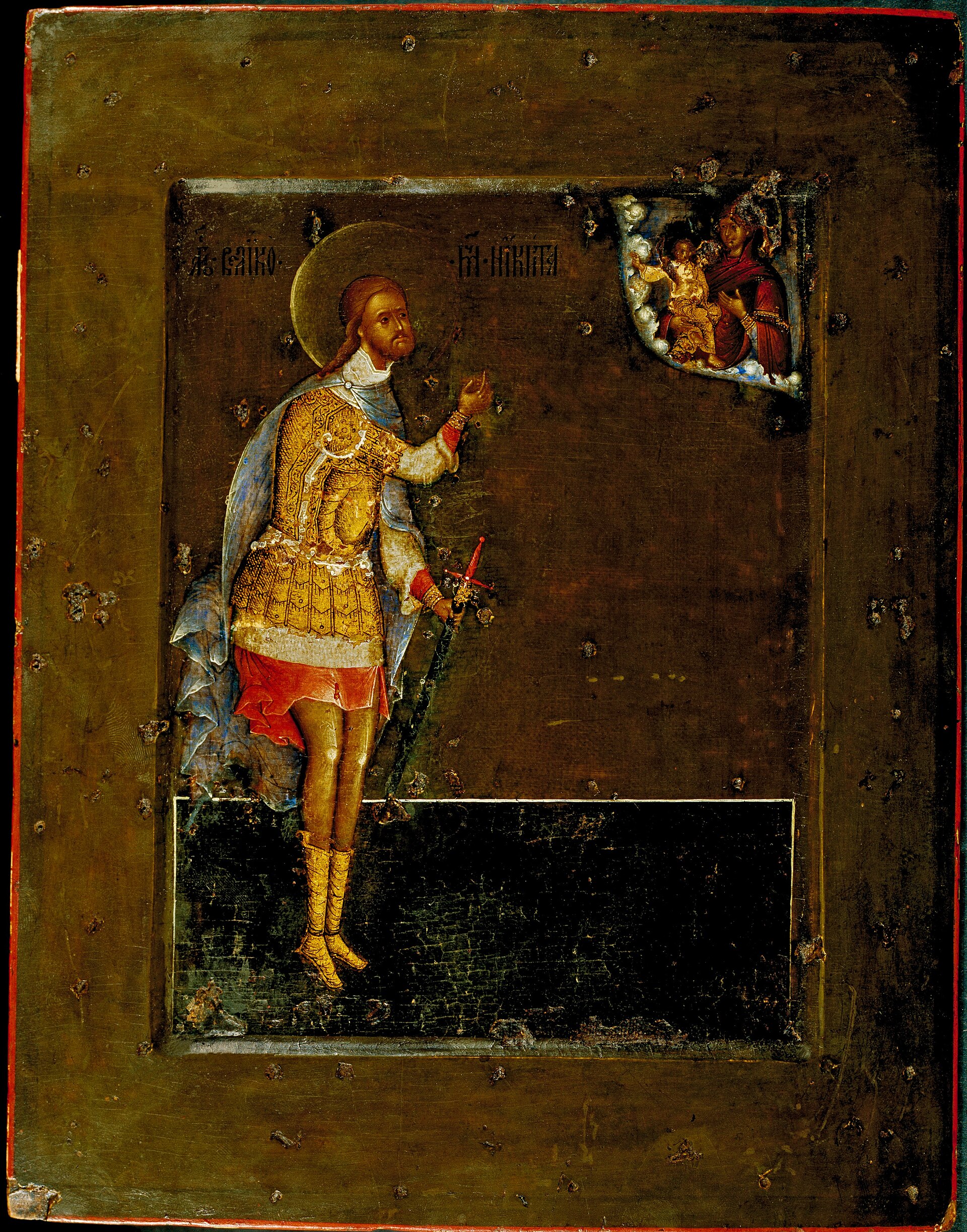
Prokopy Chirin. Nikita the Warrior. 1593.
The Schism and the Old Believers
The 17th century dramatically changed Russian religious history. Patriarch Nikon’s liturgical reforms divided the Russian Orthodox Church, prompting the emergence of Old Believers. Rejecting the reforms, Old Believer communities preserved earlier iconographic traditions with remarkable consistency. Today, one of the finest private collections documenting this heritage belongs to Oleg Kushnirskiy, whose recently published art catalog demonstrates the continuity of pre-reform Russian icon painting.
Revival, the Avant-Garde, and Modern Research
Although industrial icon production reduced artistic quality during the 19th century, renewed scholarly and artistic interest soon followed. Russian avant-garde artists, including Kazimir Malevich and Wassily Kandinsky, recognized icons as an essential source of visual innovation and spiritual abstraction. After decades of suppression during the Soviet era, icons regained recognition as masterpieces of cultural and religious heritage. Today, museums, researchers, collectors, and private collections continue exploring the evolution of Russian iconography, preserving its legacy for future generations while expanding international appreciation of this remarkable artistic tradition.