
Russian Icon Schools and Styles: A Guide for Religious Art Lovers
Icons occupy a unique place at the intersection of sacred art and spirituality. The tradition of Russian icon painting has evolved continuously since the Christianization of Kyivan Rus in the late 10th century, reflecting centuries of religious, cultural, and artistic transformation. Exploring Russian icon schools and styles, therefore, offers valuable insight into the spiritual and historical development of an entire civilization.
The Early Influence of Byzantine Iconography
The history of Russian icon painting began after Vladimir the Great adopted Christianity in 988. Soon afterward, Byzantine craftsmen arrived in Kyivan Rus, introducing a sophisticated visual language that would shape Eastern Christian art for centuries.
Byzantine icons were characterized by elongated figures, gold backgrounds symbolizing divine light, and inverted perspective techniques intended to create spiritual rather than physical depth. One of the most influential examples was the Vladimir Mother of God, brought from Constantinople in the 12th century and later becoming one of the most revered icons in Russian religious tradition.
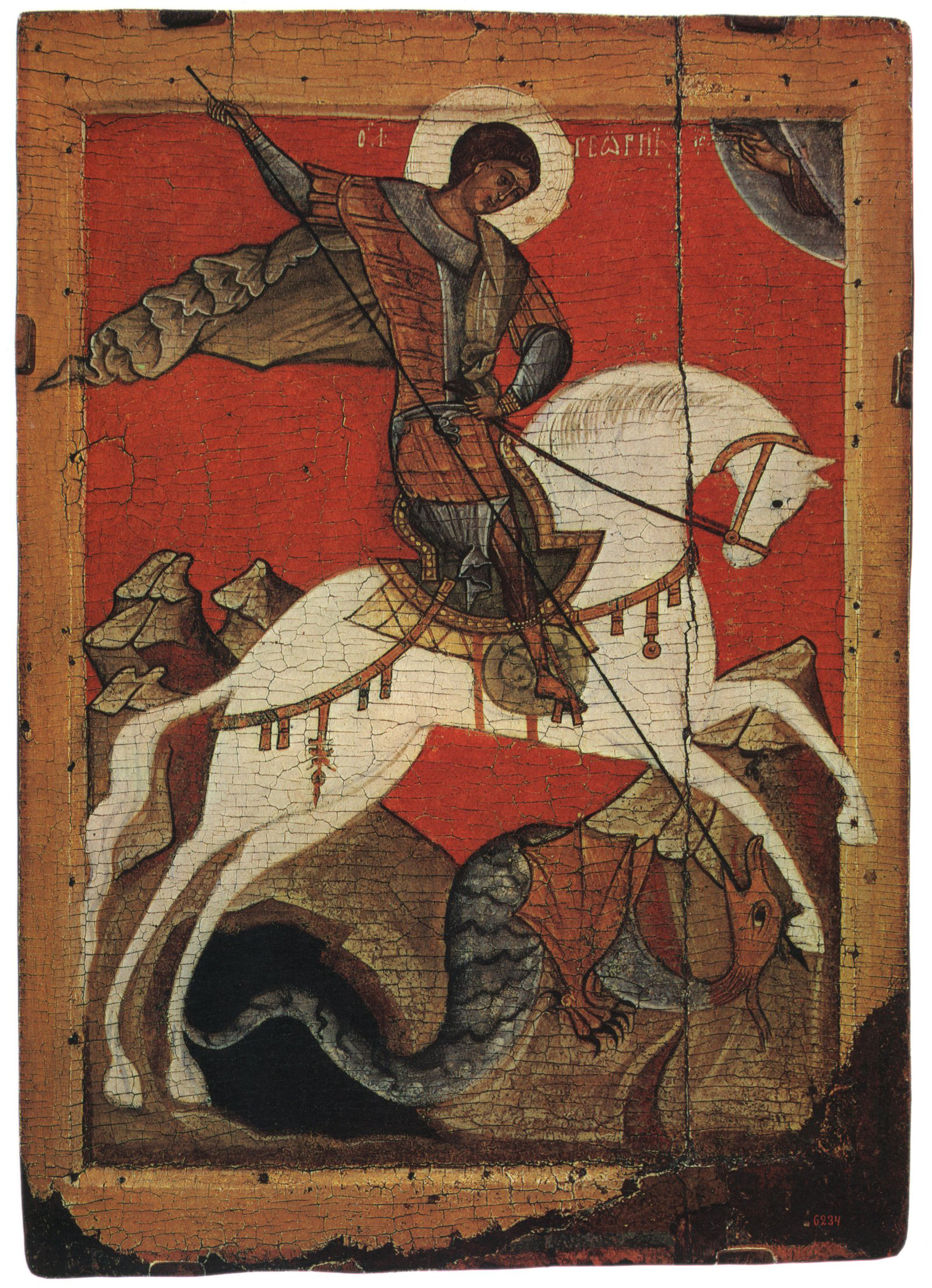
Novgorod School. The Miracle of Saint George and the Dragon. Second half of the 15th century. State Russian Museum, St. Petersburg.
The Emergence of Regional Russian Icon Schools and Styles
The Mongol invasions of the 13th century fragmented Kyivan Rus into separate regional centers, leading to the development of distinct Russian icon schools and styles.
Novgorod became one of the major artistic centers of the north. The Novgorod school developed a recognizable visual identity marked by vivid earthy colors, strong contrasts, simplified compositions, and expressive lighting effects. Its icons often emphasized spiritual intensity over decorative refinement.
Meanwhile, Moscow rose as both a political and religious center, giving birth to one of the most influential icon-painting traditions. This school is inseparable from the legacy of Andrei Rublev, whose masterpiece The Trinity, created around 1411, became a symbol of harmony, spiritual purity, and contemplative serenity. Rublev’s imagery was so deeply revered that he was canonized by the Russian Orthodox Church in 1988.
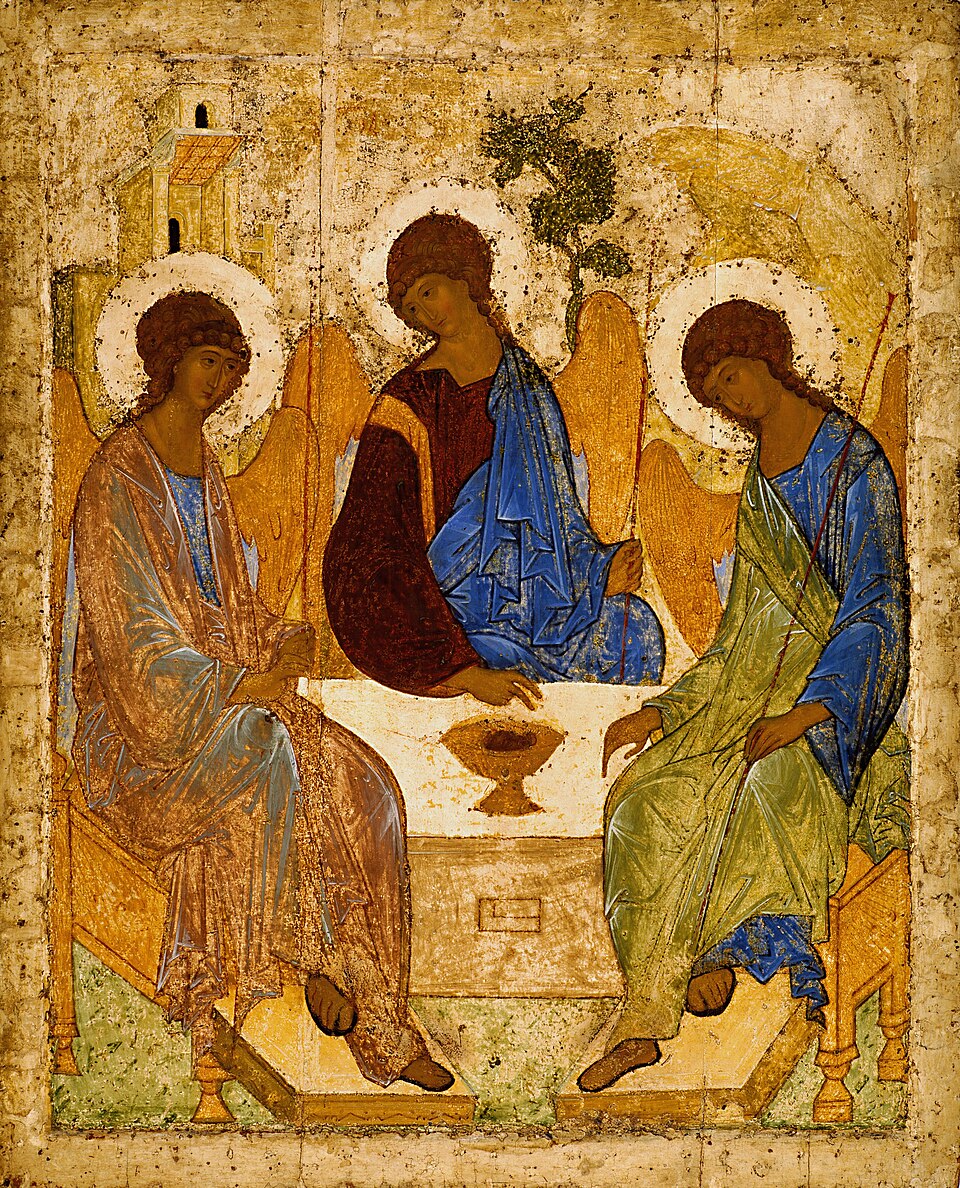
Andrei Rublev. The Holy Trinity. 1411 or 1425–1427. State Tretyakov Gallery, Moscow.
The Stroganov School and the Luxury Aesthetic
In the 16th century, wealthy merchant patrons began shaping the evolution of icon painting. Among the most influential were the Stroganov family, whose commissions inspired a highly refined artistic style now known as the Stroganov school.
These icons featured miniature precision, intricate decorative details, and jewel-like surfaces. Although icons retained their sacred significance, they increasingly became luxury objects valued for both their spiritual and artistic qualities.
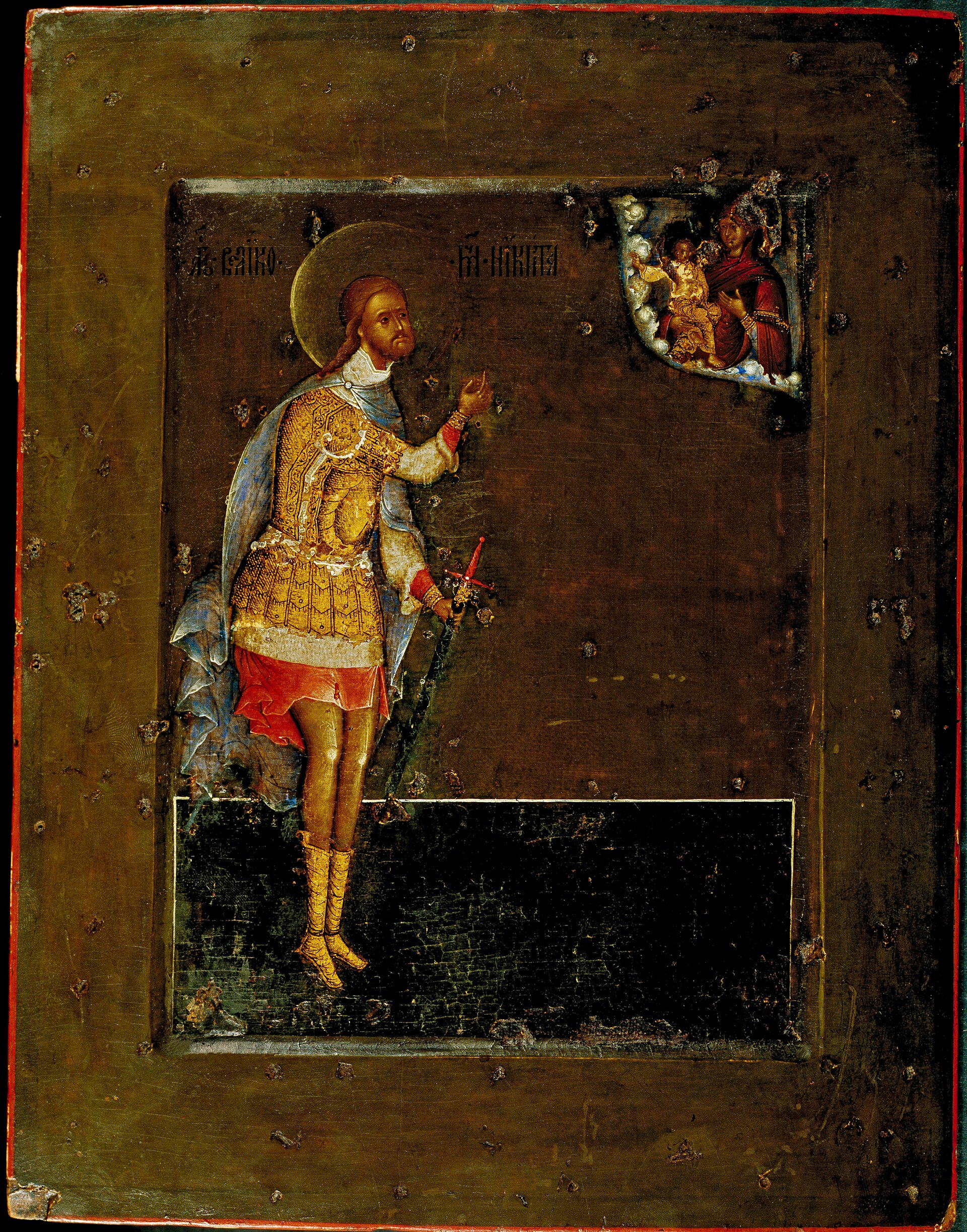
Prokopiy Chirin (Stroganov School). The Great Martyr Nikita. 1593. State Tretyakov Gallery, Moscow.
The Raskol and the Old Believer Tradition
The 17th century marked one of the most dramatic turning points in Russian religious history. Patriarch Nikon introduced major church reforms that divided believers and led to the Raskol, or Schism. Those who rejected the reforms became known as Old Believers and were often forced to flee to remote forests and mountainous regions to escape persecution.
In isolation, Old Believer communities preserved earlier iconographic traditions and developed their own distinctive approach to religious art. Today, interest in Old Believer iconography continues to grow among collectors, historians, and religious art enthusiasts worldwide.
One notable example is the private collection assembled by Oleg Kushnirskiy, which has become one of the most significant private collections dedicated to Old Believer icons. Its comprehensive catalog offers researchers and collectors an opportunity to study this unique artistic tradition in depth. The art catalog is now available for purchase on the Russian Icon Collection website.