
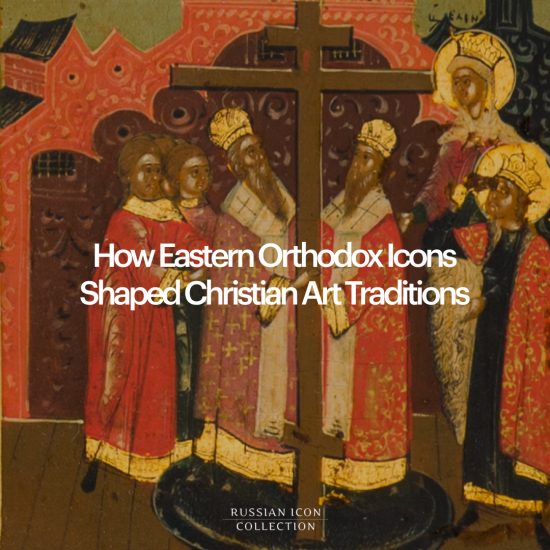
How Eastern Orthodox Icons Shaped Christian Art Traditions
Eastern Orthodox icons have existed for more than fifteen centuries, occupying a unique place in Christian visual culture. Their influence on Christian art traditions is defined by a complex interaction of aesthetics, symbolism, and theological meaning. Far more than decorative objects, icons function as spiritual instruments that serve as “windows into the divine” and remain central to Orthodox worship and devotion.
The Visual Language of Theology
Orthodox iconography is not simply religious illustration. It is a structured visual language in which theological ideas are expressed through color, form, composition, and symbolism. Following the rulings of the Second Council of Nicaea in the 8th century, the veneration of icons became closely linked to the veneration of the saints they depict, establishing their sacred status within Christian practice.
The stylistic features of Orthodox icons were developed to convey spiritual rather than physical reality. Techniques such as elongated proportions, reverse perspective, and stylized forms were used to emphasize transcendence over naturalism. Gold backgrounds, one of the most recognizable features of icon painting, symbolize divine light rather than earthly space.
Spiritual Grammar and Cross-Cultural Influence of Eastern Orthodox Icons
The Great Schism of the 11th century separated Eastern and Western Christianity, leading to distinct artistic developments in religious painting. However, visual elements of Eastern tradition continued to influence Western Christian art.
Traces of Byzantine aesthetics can be found in early Italian Renaissance painting and medieval altarpieces, where frontal compositions, symbolic spatial organization, or stylized figures reflect the shared roots of Christian visual language. This exchange demonstrates the broader cultural impact of Eastern Orthodox icons beyond the Orthodox world.
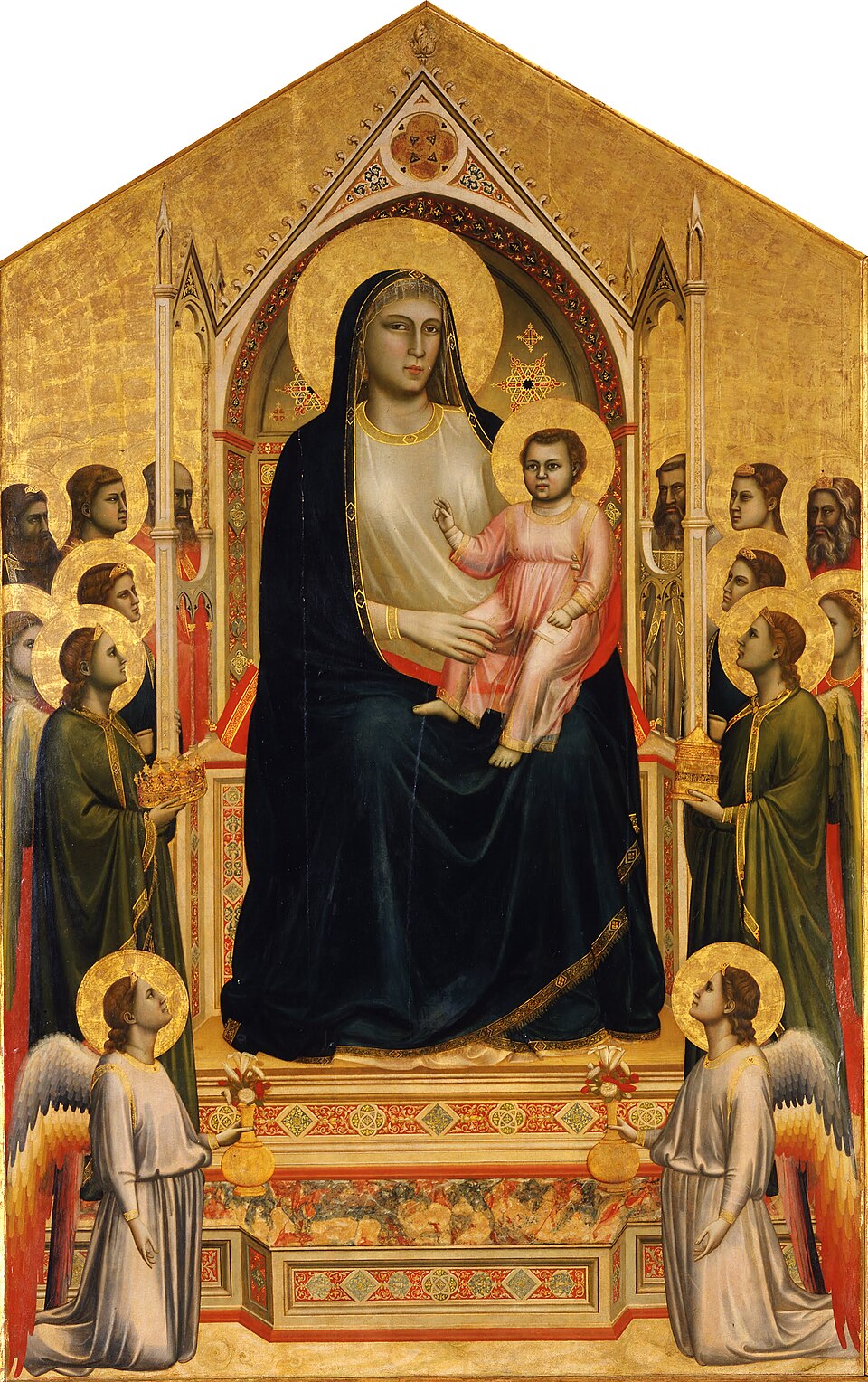
Giotto di Bondone. Circa 1310. Tempera on panel. Uffizi Gallery, Florence.
Preservation of Tradition by Old Believers
Among the most faithful preservers of early iconographic traditions are Old Believers who resisted the liturgical reforms of Patriarch Nikon in the 17th century. Their communities preserved pre-reform artistic standards under difficult historical conditions of constant persecution and isolation.
Old Believer icons are characterized by strict adherence to canonical proportions, darker and more restrained color palettes, and the absence of Western Baroque influence that entered Russian icon painting. Today, these works are highly valued by collectors and researchers. They are part of private collections, such as the extensive collection of Oleg Kushnirskiy, which is supported by a detailed scholarly catalog.
In recent decades, renewed academic and museum interest has brought Eastern Orthodox icons—alongside Old Believer icons—back into the global conversation on Christian art history, with exhibitions and research projects highlighting their enduring cultural and spiritual significance.