
How a Scholarly Art Book Can Change the Study of Russian Icons
The historical journey of Russian icons has been complex and often turbulent. Few examples of antique Russian iconography survived the decades of Soviet-era destruction carried out in the name of ideological conformity. Those that survived did so mostly by chance: rare and precious icons уere preserved by researchers or sold abroad by the government, smuggled out of the country in the suitcases of émigrés or hidden away for decades in the attics of remote, fading villages. At the same time, intellectuals willing to risk persecution played a crucial role in preserving Russian religious art. These and other overlooked chapters in the history of Russian icon painting are examined in a scholarly art book presented by Russian Icon Collection.
The Role of Early Private Collections and Their Catalogs in Art Preservation
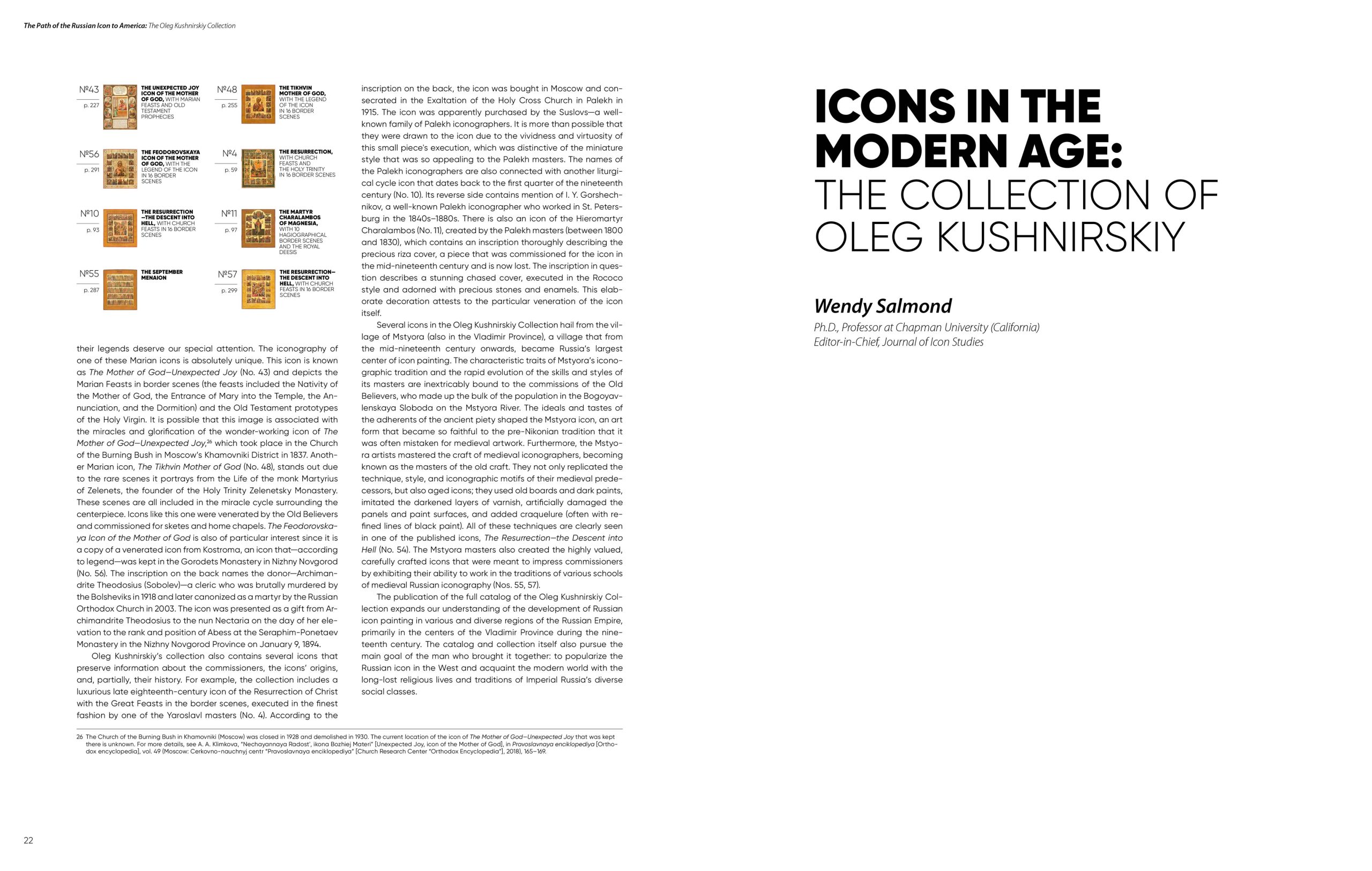
The survival of Russian icons also depended on the efforts of Old Believers, antiquarians, and bibliophiles, who were among the first to identify and preserve artifacts of Russian religious art. As Irina Shalina noted in Oleg Kushnirskiy’s art catalog, today’s major institutional collections—such as those of the Tretyakov Gallery, the Russian Museum, and the State Historical Museum—were significantly shaped by acquisitions from merchants, industrialists, and scholars who carefully documented their holdings. This tradition was disrupted during the Soviet period, but it was never fully extinguished. With the renewed interest in Russian icons after 1991, the catalog-album once again became a key instrument of research and attribution.
The Post-Soviet Boom and the Lack of Scholarly Rigor
The 1990s saw a dramatic influx of Russian icons into Western markets, driven by emigration and growing international demand for Russian antiquities. However, this period often lacked rigorous scholarly oversight. Collectors and dealers frequently operated without reliable systems for evaluating authenticity or artistic significance. As a result, the rapid growth of the market also led to a significant increase in forged icons. This, in turn, helped foster a new generation of specialists dedicated to the study, authentication, and repatriation of Russian icons, working across international collections and archives.
The Scholarly Art Book of the Kushnirskiy Collection as a Case Study
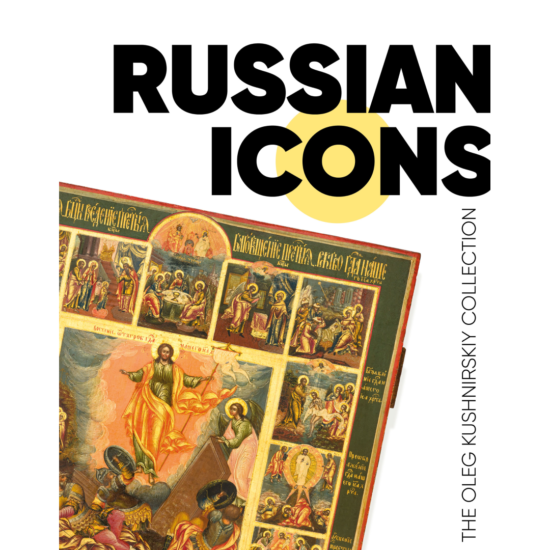
The 2025 English-language scholarly art book, Russian Icons: The Oleg Kushnirskiy Collection, stands as a strong example of the growing depth of academic research in the field of Russian religious art. The catalog of Oleg Kushnirskiy’s private collection of Russian icons demonstrates what rigorous and comprehensive iconographic scholarship looks like in practice. Documenting more than 60 works, the publication has brought the unique collection to public attention, significantly increasing the visibility of Russian icons within both American and international art discourse and helping establish a new foundation for future icon studies.