
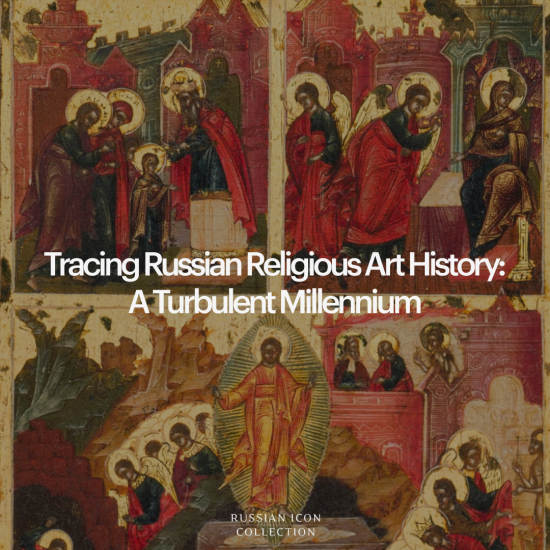
Tracing Russian Religious Art History: A Turbulent Millennium
Russian Orthodox religious art history began in 988, when Prince Vladimir of Kyiv accepted Christianity, and the Christian faith, along with its rich visual tradition, spread throughout Kyivan Rus’. From that moment onward, Orthodox Christianity passed through many transformative periods, each leaving a distinct mark on religious art and icon painting.
Key Milestones of Russian Religious Art History
Byzantine Foundations (10th-12th Centuries)
The baptism of Prince Vladimir in 988 marked the beginning of a new artistic era for Kyivan Rus’. Greek masters arrived to decorate the Cathedral of St. Sophia in Kyiv with mosaics and frescoes, while numerous icons and liturgical items were imported from Byzantium. One of the most celebrated examples is the Vladimir Mother of God, brought from Constantinople circa 1131. Revered for centuries, it became a model for the tender, contemplative style that influenced generations of Russian icon painters.
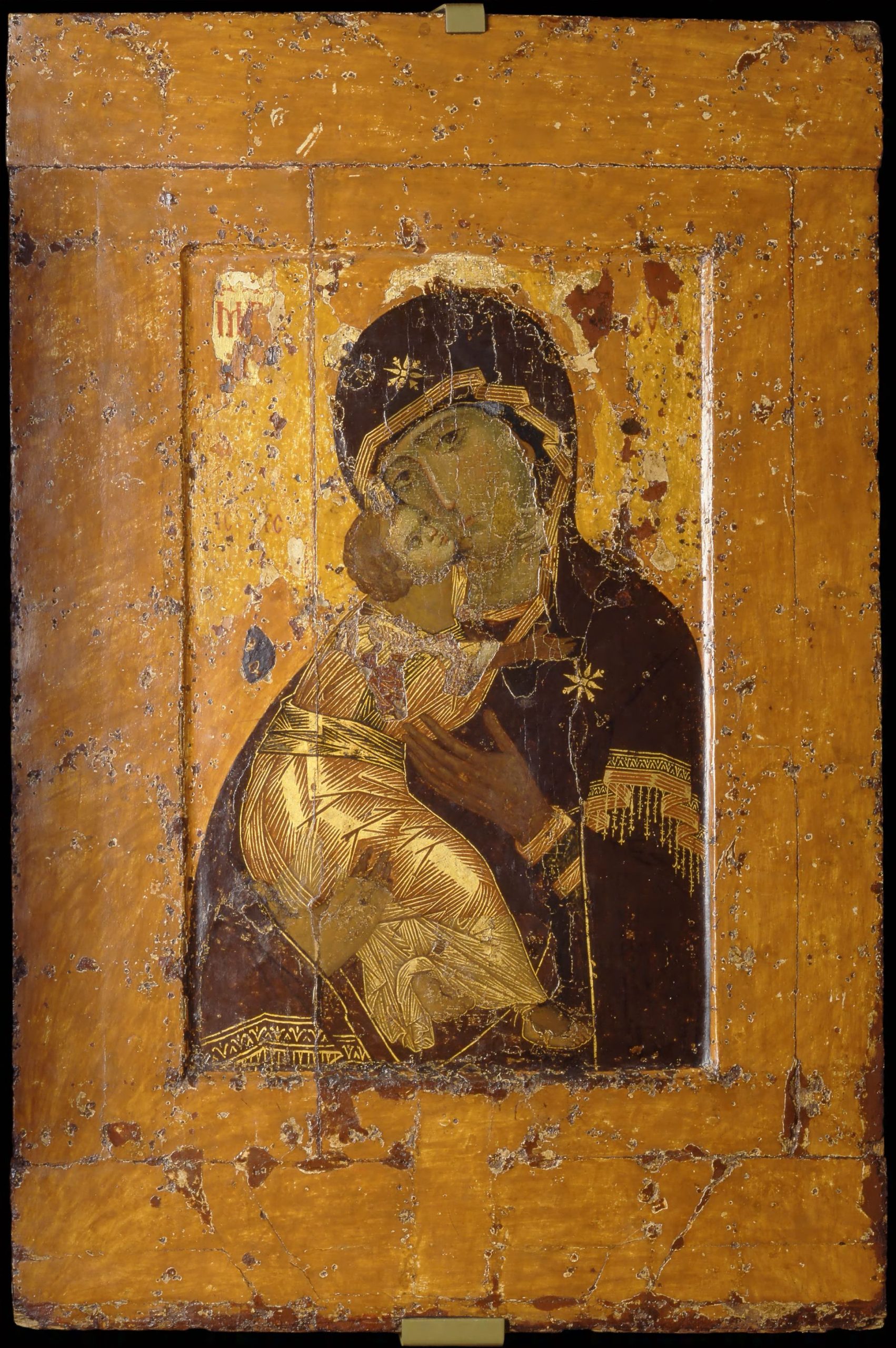
Vladimir Mother of God. First third of the 12th century.
Regional School Development (13th-14th Centuries)
The Mongol invasion of 1237 weakened ties between Kyivan Rus’ and Byzantium, contributing to the development of Russian religious art inward. As communication with the main Orthodox spiritual center declined, regional icon painting schools flourished. Distinctive artistic traditions developed across different centers, characterized by bold graphic compositions, vermilion backgrounds, expressive outlines, and many other localized stylistic features.
The Golden Age (15th-16th Centuries)
The Golden Age of Russian iconography is best represented by Andrei Rublev’s The Trinity, painted in the first third of the 15th century. Depicting three angels united in a quiet circle of harmony, the icon became one of the greatest masterpieces of Orthodox art. Rublev’s work inspired Dionysius, who created numerous icons using light, luminous mineral pigments at the Ferapontov Monastery in the early 16th century. This period also saw the emergence of the monumental multi-tiered iconostasis and the codification of iconographic standards at the Stoglav Council of 1551.
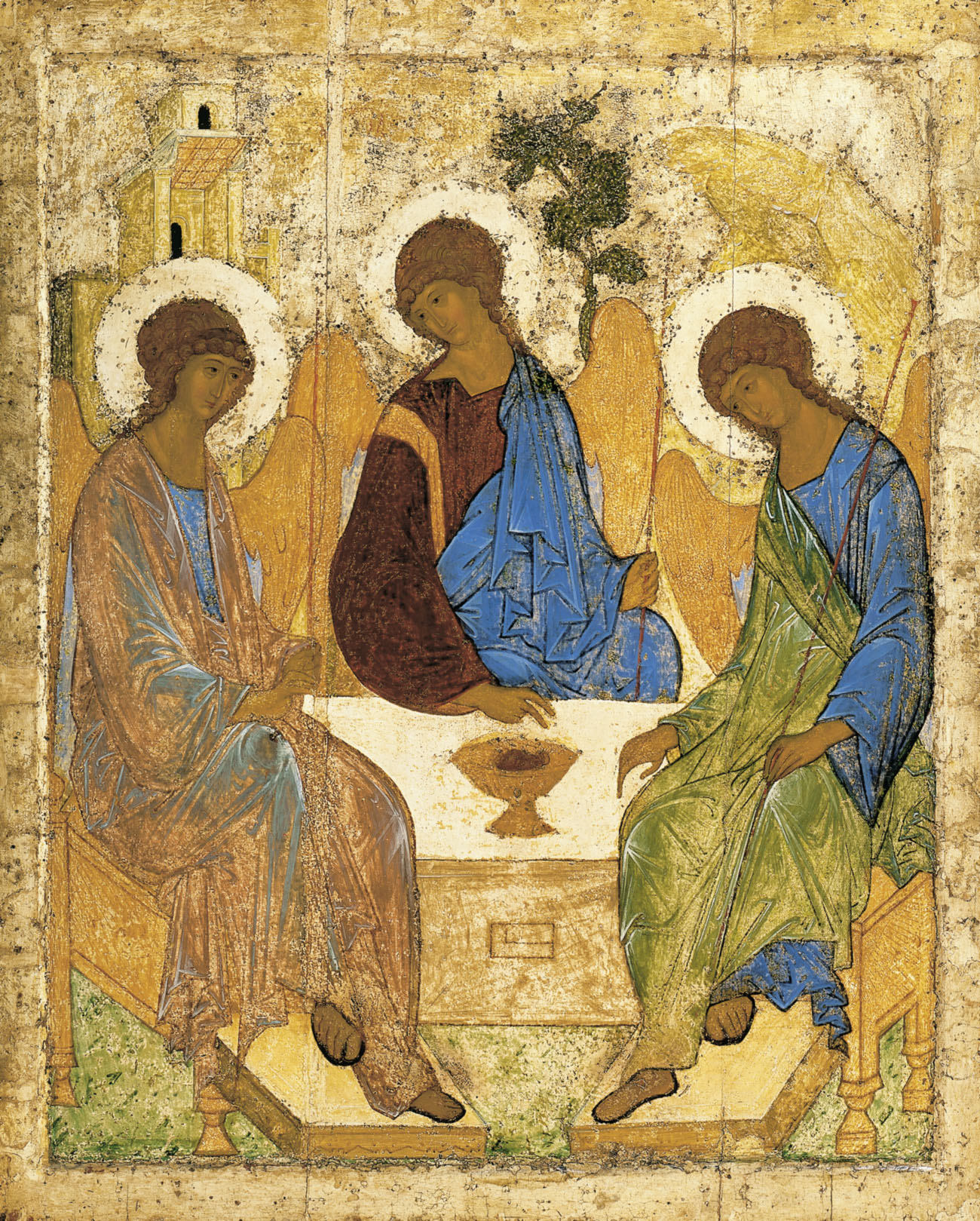
Andrei Rublev. The Trinity. Circa 1422–1427.
The Schism and Old Believer Iconography (17th Century)
In 1653, Patriarch Nikon introduced sweeping reforms intended to align Russian Orthodox rituals with Greek practices. The reforms were enforced rigorously, and those who rejected them faced persecution and anathema. The resulting Old Believer movement preserved earlier artistic traditions, creating a distinctive branch of icon painting that remains highly valued today. Old Believer icons continue to attract growing interest among collectors, with one of the most significant overseas icon collections assembled by Oleg Kushnirsky and documented through the Russian Icon Collection project.
Moreover, like any art form, icon painting evolved with changing worldviews. Simon Ushakov’s works in the 17th century represent the final synthesis of the old canon with emerging realism.
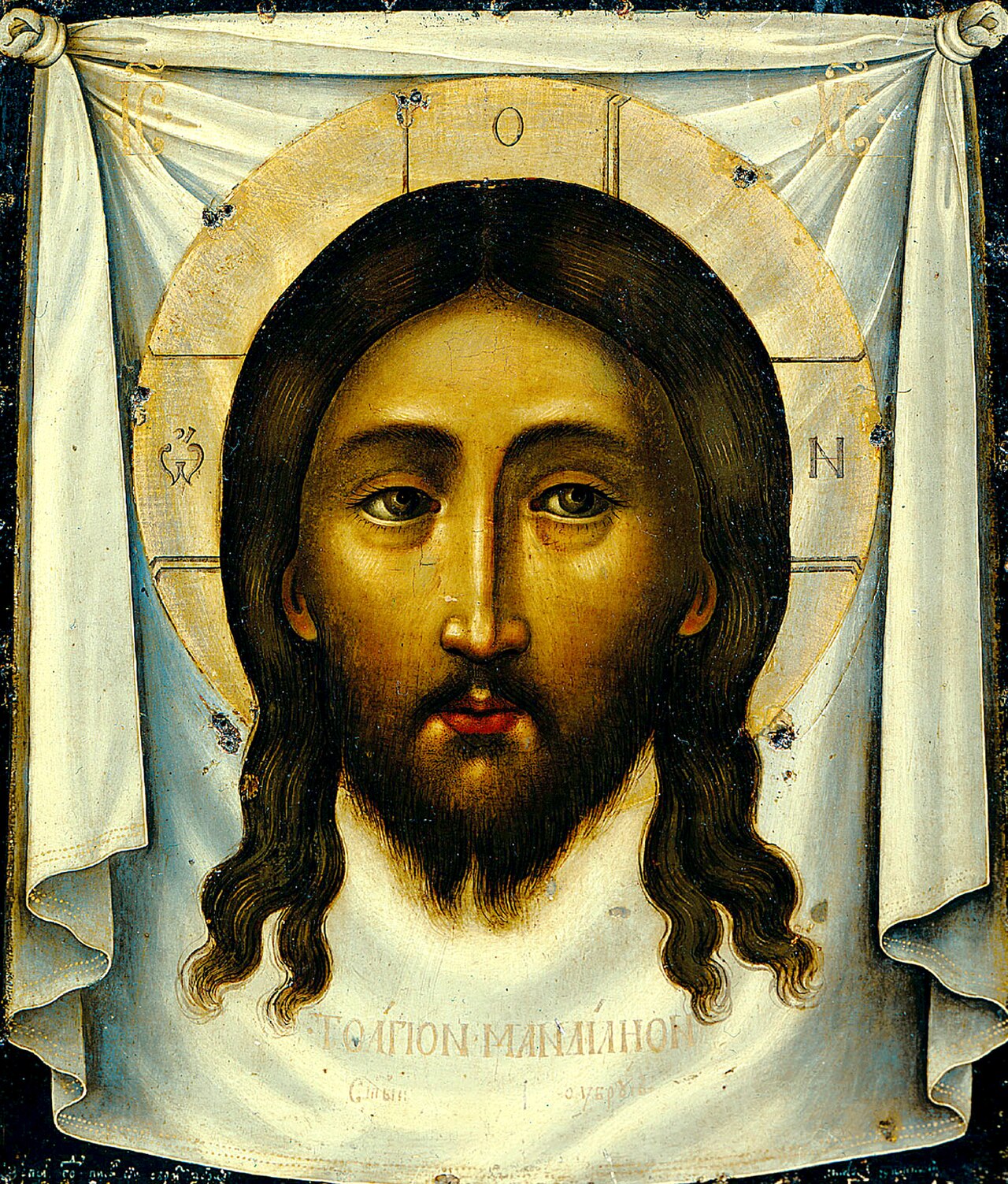
Simon Ushakov. The Savior Not Made by Hands from the Trinity Lavra of St. Sergius. 1658.
The Imperial Period (18th-19th Centuries)
For centuries, the icon remained the main form of painting in Rus’, until the reforms of Peter I in the early 18th century encouraged academic influences in religious painting. The majority of the Imperial period icons are characterized by a departure from the strict medieval canons. Under the influence of Western European art and the activities of the Academy of Arts, icon painters began to use oil paints, chiaroscuro, and linear perspective, shifting from stylized representation to anatomical accuracy. Old Believer icon painters, however, remained the guardians of medieval traditions, restoring old icons and creating new ones in the traditional style.
Rediscovery and the Modern Period
Although Soviet anti-religious policies interrupted centuries of artistic continuity, many icons survived through the efforts of private collectors, museums, and religious institutions. Researchers are now paying particular attention to late icon painting, created after the 17th century, which had long been overlooked by art historians. Today, Russian religious art history continues to be studied and appreciated through important collections in museums and private holdings around the world, preserving the legacy of one of Eastern Christianity’s richest artistic traditions.