
Russian Icons in Museums and Private Collections: A Global Legacy
Russian icons are an important part of the world’s religious and artistic heritage. Over centuries, many rare icons left Russia through migration, private collecting, political upheavals, and cultural exchanges. Today, Russian icons in museums and private collections can be found across the world, giving scholars, collectors, and visitors an opportunity to explore this unique artistic tradition outside its country of origin.
Russian Icons in Museums and Private Collections
Russian icons in museums
One of the most important destinations for icon research is the Icon Museum and Study Center in Clinton, MA. This nonprofit institution houses more than 1,000 Russian icons and related artifacts, making it one of the largest collections outside Russia and the most significant in North America. The museum’s holdings span several centuries, with some works dating back to the 15th century.
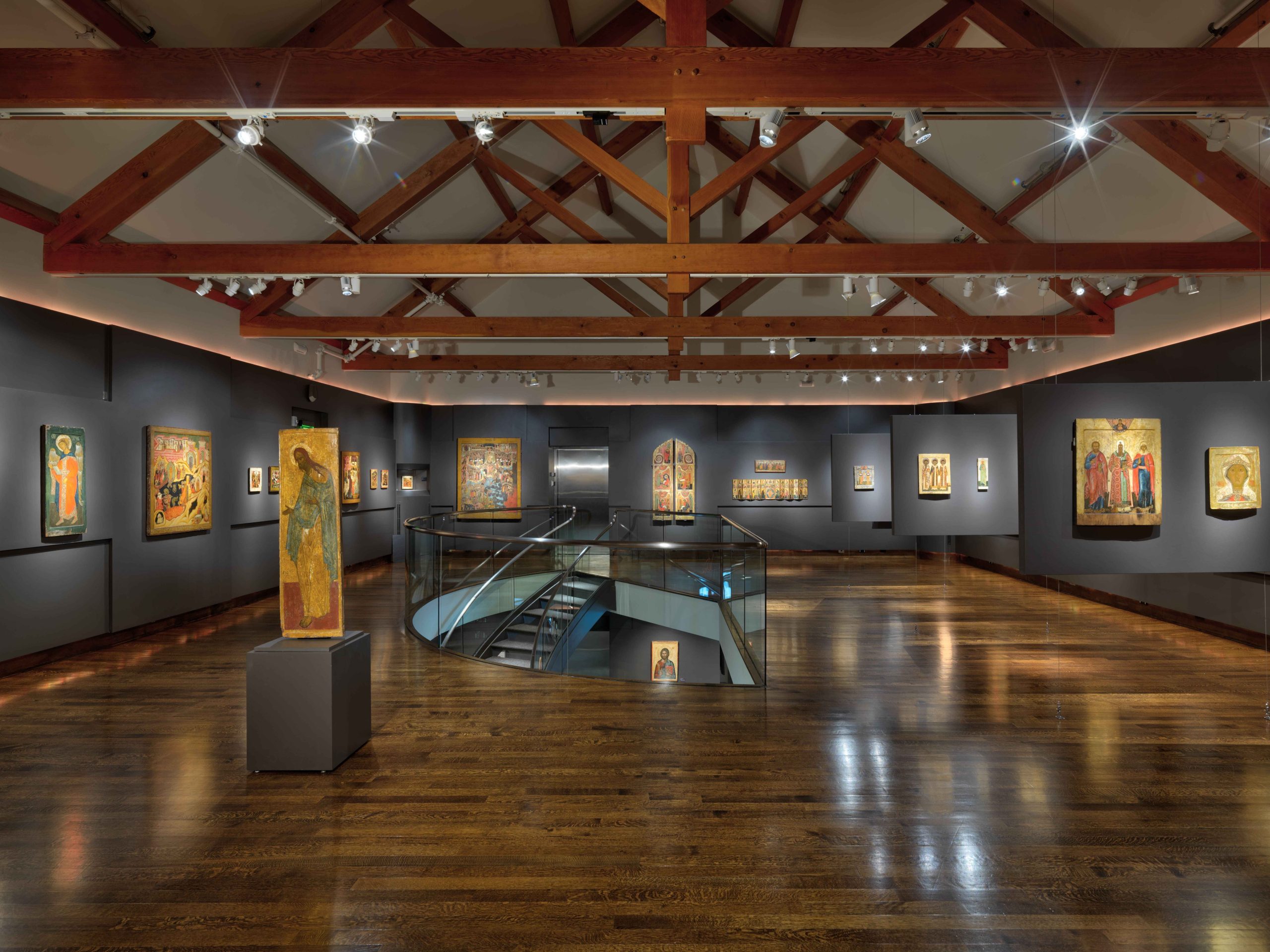
The Icon Museum and Study Center in Clinton, Massachusetts. Photo: courtesy of the museum.
Another major collection is preserved at Nationalmuseum in Stockholm, Sweden. The museum owns hundreds of Russian icons, many of which entered the collection through donations from Swedish banker and art patron Olof Aschberg in the early 20th century. His collection reflects a period when Russian religious art became increasingly available outside the Soviet Union.
Germany’s Ikonen-Museum Recklinghausen is also internationally recognized for its extensive collection of Orthodox icons. Dedicated specifically to iconography, the museum attracts researchers and visitors interested in both Russian and Greek religious art traditions.
Russian icons in gallery and private collections
Russian icons in gallery and private collections are equally important for preserving historical and religious heritage. Among the best-known collections was the one managed by the Morsink Icon Gallery in Amsterdam, Netherlands. The gallery specialized in Russian and Greek icons created between the 15th and 19th centuries and was widely respected among collectors and scholars.
The most extensive collection of the previous century belonged to American collector George R. Hann, an aviation industrialist whose interest in Russian religious art led him to acquire rare icons from major Russian institutions, including the Tretyakov Gallery and the State Historical Museum in Moscow.
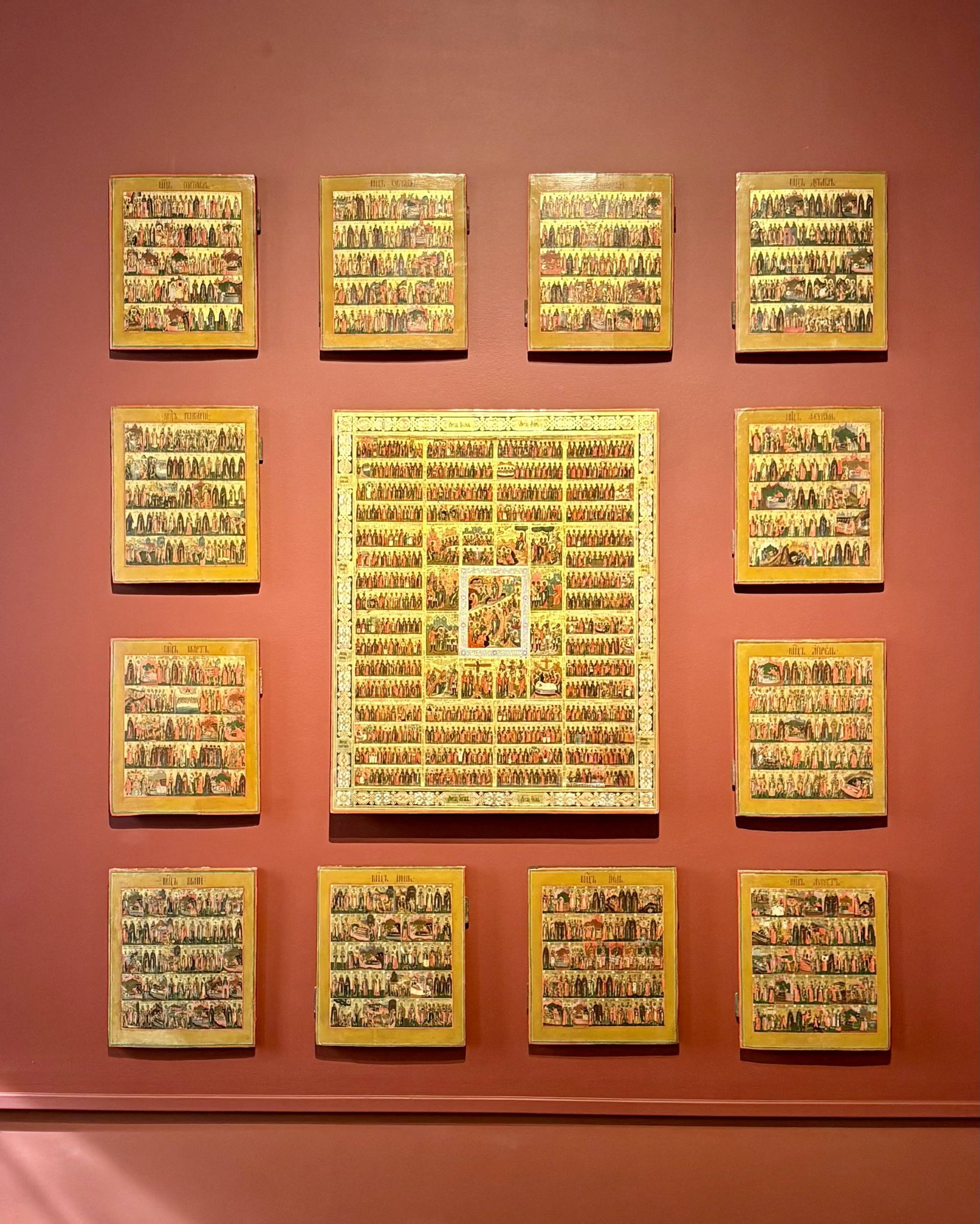
Icons from Oleg Kushnirsky’s collection on display at the Icon Museum and Study Center in Clinton, Massachusetts. Photo: courtesy of the museum.
The Collection of Oleg Kushnirskiy
Any serious exploration of Russian icons in museums and private collections should include the private Old Believer icon collection assembled by Oleg Kushnirskiy. Considered one of the largest overseas collections of its kind, it preserves a unique religious and artistic tradition that endured decades of persecution in Russia. The collection’s catalog offers valuable insight into the history, symbolism, and evolution of Old Believer iconography.
Together, these museums and private collections preserve a remarkable artistic legacy that continues to inspire researchers, collectors, and admirers of Orthodox art around the world.