
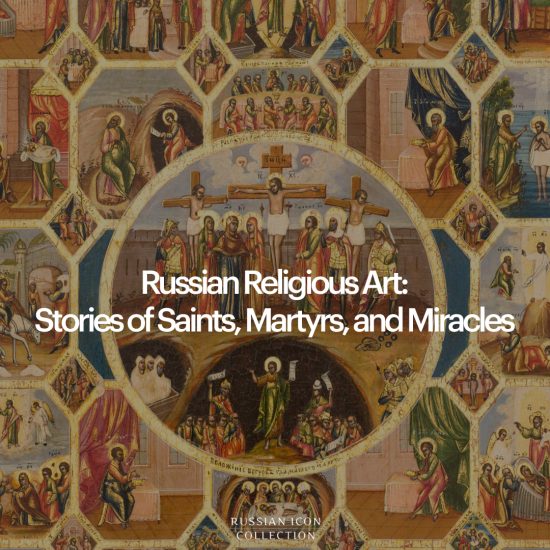
Russian Religious Art: Stories of Saints, Martyrs, and Miracles
Orthodox icons and religious paintings form the cornerstone of the Russian religious art tradition. They depict stories from the lives of Jesus Christ, the Mother of God, martyrs, and saints whose faith and devotion have shaped Orthodox Christian culture for centuries. Alongside biblical events, these works preserve church traditions, accounts of miracles, and legends that have become an important part of religious and artistic heritage.
Russian Religious Art: History, Tradition, and Legend
Russian religious art depicts sacred stories that Orthodox believers understand through Scripture and Church tradition, while some images also reflect apocryphal texts and popular legends. Painted traditionally in egg tempera and gold on wooden panels, they illustrate familiar biblical subjects, including the Nativity, Crucifixion, Resurrection, and Christ’s Descent into Hell. These images are not simply historical illustrations; they also communicate theological ideas through established symbols and visual conventions.
Other works draw on stories outside the canonical Gospels, including accounts of the Virgin Mary’s life and the deeds of individual saints. Warrior saints are sometimes shown defeating dragons, while the prophet Elijah is depicted ascending to heaven in a fiery chariot. Saint Nicholas appears in stories of miraculous rescues and protection. Some revered icons also have their own histories of reported miracles, including protecting cities from invasion and bringing comfort to people facing illness or hardship.
Well-Known Biblical Stories & Icons
Andrei Rublev’s Trinity
Andrei Rublev’s celebrated Trinity, dated to the first third of the 15th century, is based on Genesis 18, in which Abraham welcomes three mysterious visitors at the oak of Mamre. Rublev’s composition omits Abraham and Sarah, focusing instead on three angels seated around a table with a single chalice. The image is widely understood in Orthodox tradition as a symbolic representation of the Holy Trinity. Its restrained composition and contemplative atmosphere make it one of the most recognized works of medieval Russian icon painting.
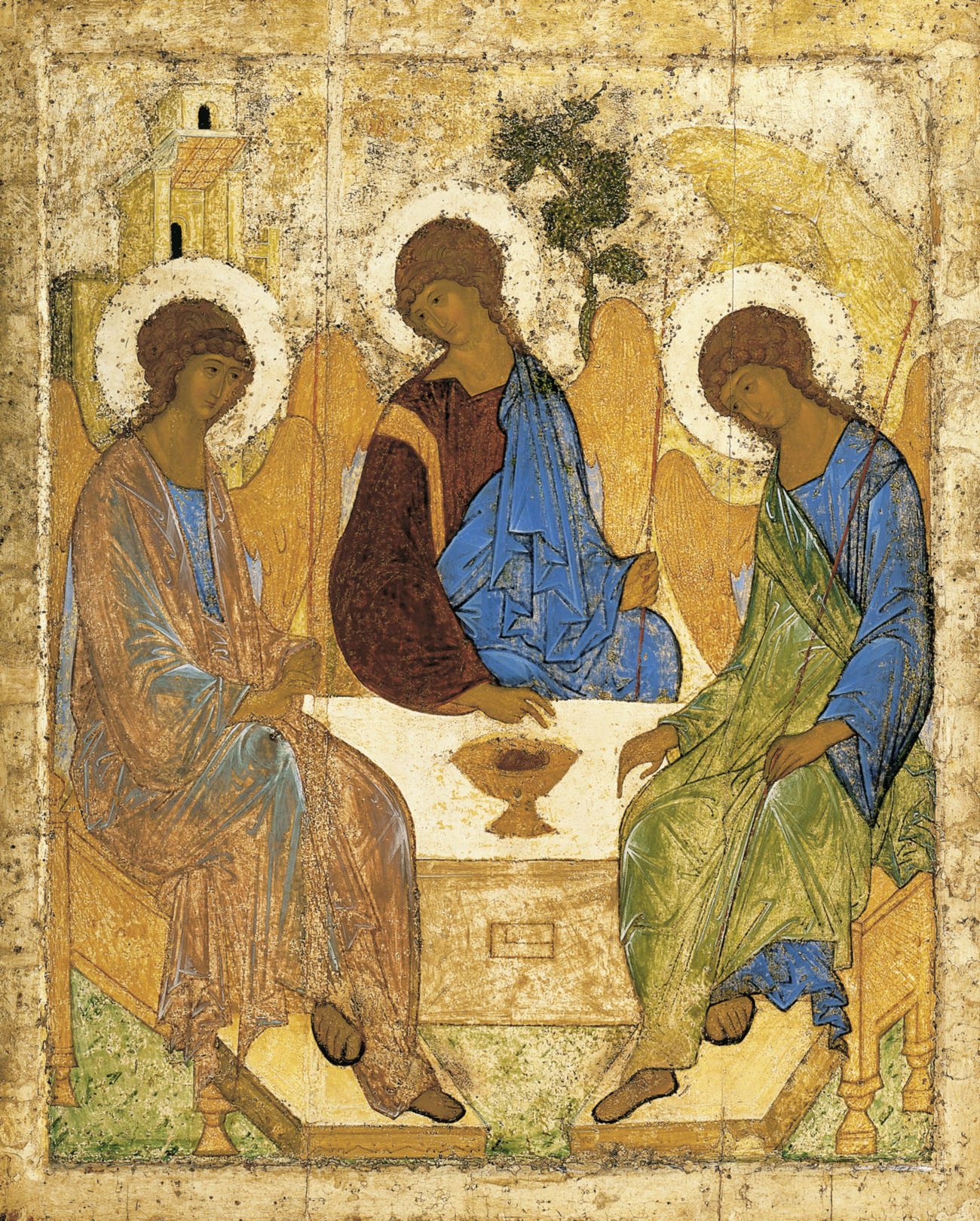
Andrei Rublev. The Trinity. Circa 1422–1427.
Our Lady of Vladimir
The Our Lady of Vladimir icon was created in Constantinople in the first third of the 12th century, although church tradition attributes its original image to Saint Luke. It belongs to the Eleousa, or Tenderness, iconographic type, showing the Christ Child pressing His cheek against His Mother’s. The icon was brought to Kyiv in the 12th century and transferred to Vladimir in 1155. In 1395, it was taken to Moscow as Tamerlane’s forces approached. Their subsequent withdrawal became associated with the icon’s intercessory power, strengthening its reputation as a protector of the city.
Exploring Orthodox Stories Through Old Believer Art
Old Believer iconography offers another perspective on traditional Orthodox stories about biblical figures, saints, and martyrs. Many works featured in Oleg Kushnirsky’s icon catalog depict episodes from the lives of revered figures, including John the Baptist and Saint Charalambos of Magnesia. Exploring these icons provides an opportunity to discover traditional visual interpretations of biblical narratives, miracles, and the lives of Christian saints.