
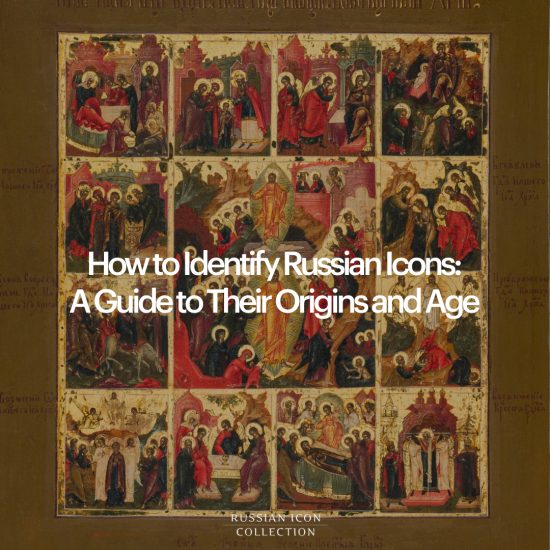
How to Identify Russian Icons: A Guide to Their Origins and Age
Russian icons are an important part of Eastern Orthodox religious art, but identifying their origin and period requires more than recognizing a familiar saint or biblical scene. To understand how to identify Russian icons, collectors should examine several features together: inscriptions, painting techniques, wooden panels, stylistic details, and metal covers. Each can provide useful clues, although none is conclusive on its own.
How to Identify Russian Icons by Their Inscriptions and Imagery
Begin with the inscriptions. Traditional Russian icons often feature Church Slavonic lettering, abbreviated names of Christ and the Virgin Mary, and titles identifying saints or religious scenes. These inscriptions help establish the subject and may provide clues about the iconographic tradition. However, Church Slavonic was also used in other Orthodox regions, so it does not prove Russian origin by itself.
Next, compare the composition, figures, colors, and decorative details with documented examples. Regional workshops developed recognizable approaches to these elements. The Oleg Kushnirskiy icon catalog offers further examples of Russian icon painting that can help readers become familiar with its different traditions.
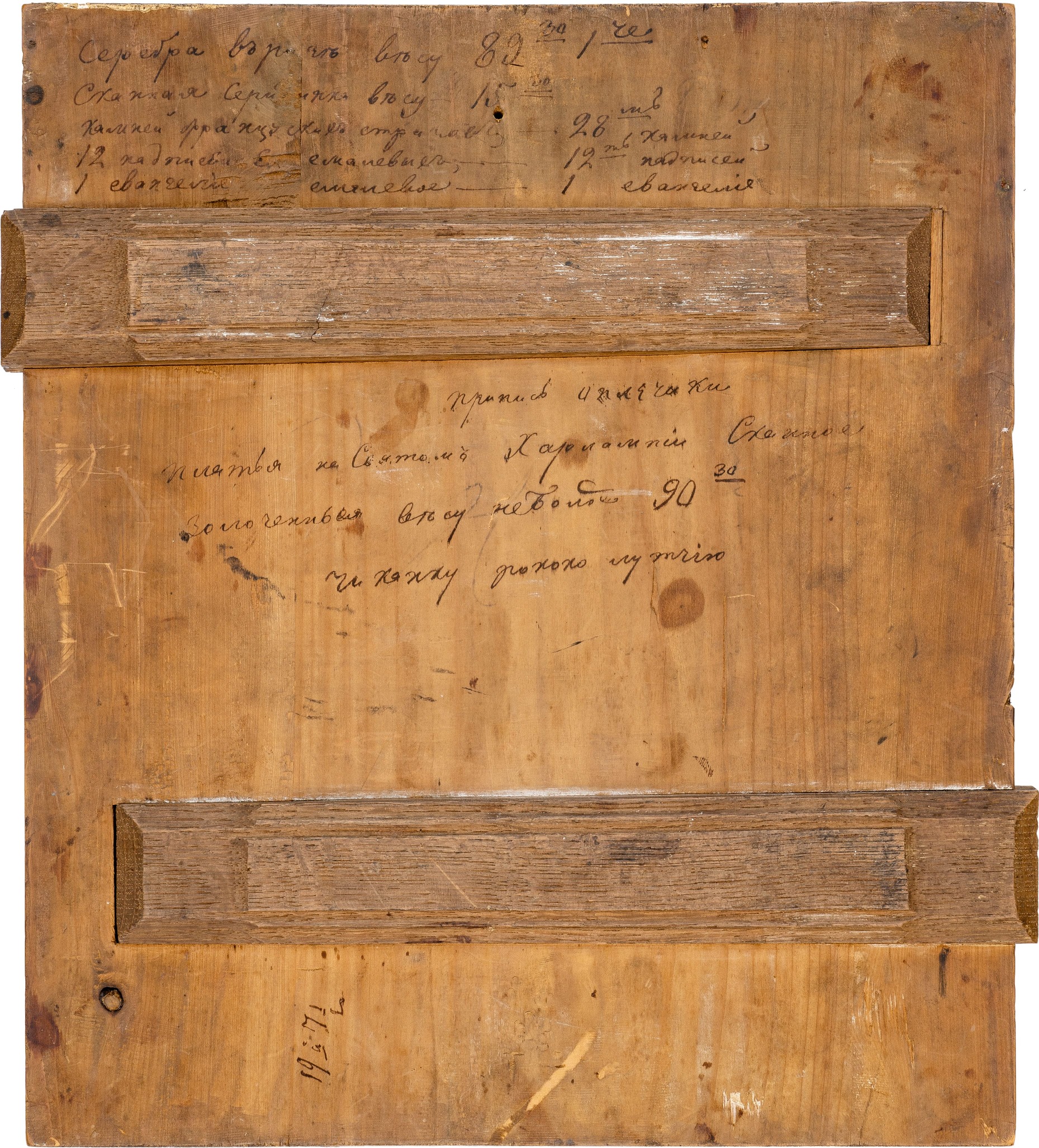
An ink inscription on the back of Icon No. 11 helps determine when the work was created. Over the topmost support board: Серебра въ ризѣ вѣсу 89 зо 1 че / Сканная Сери[…]ка вѣсу 15 зо / Камней францускихъ стр[…] —28мъ камней / 12 надписей Е[] емалевыхъ —12ть надписей / 1 евангелiе емалевое—1 Евангелiе (translation: Weight of silver in the oklad eighty-nine zolotnik / weight of skan’ fifteen zolotnik / twenty-eight French gems / twelve enamel inserts with inscriptions / one enamel Gospel). Between the support boards: припись и плечики / платья на Святомъ Харлампiи Сканное / золо- ченье вѣсу неболее 90 зо / чиканку рококо лут- чiю (translation: Skan’ on the background and the vestments of Saint Charalambos / gilding, weight not more than 90 zolotnik / best rococo embossing). Under the lower support board: 19й 71го (translation: Nineteenth seventy-first). The Oleg Kushnirskiy Collection
Examine the Wooden Panel and Paint Layers
Traditional Russian icons were commonly painted on wooden boards prepared with levkas, a ground made from chalk or gypsum and animal glue. A layer of cloth, known as pavoloka, was often applied beneath it. The paint was traditionally egg tempera, although oil painting and mixed techniques became more common in later periods.
Look for a recessed central field called a kovcheg. It appears on many older panels but was not used on every icon, so its presence is only one dating clue. Turn the panel over to inspect the wooden splines, or shponki, fitted into the back to help limit warping. Their construction, together with the wood, ground, and paint layers, can help specialists assess the panel’s age and history.
Check the Metal Cover and Hallmarks
Some icons have a decorative metal cover called an oklad or riza. Silver examples may carry marks identifying the maker, assay office, silver fineness, or year of production. These details can help date the cover, but not necessarily the painted image: an oklad may have been added or replaced later.
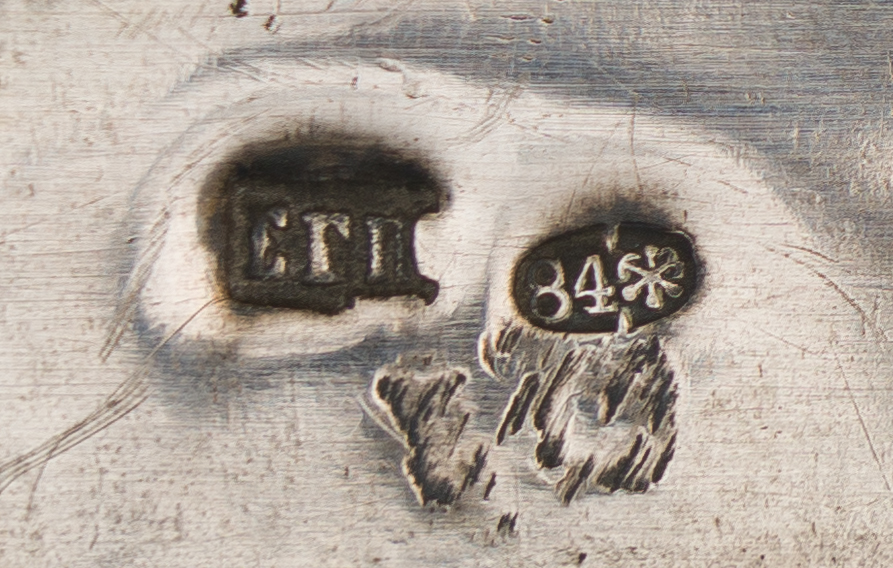
Hallmarks and brands of the Icon No. 3 oklad cover:
St. Petersburg coat-of-arms with the assayer’s mark “84” (last quarter of the nineteenth century); barely readable mark “ЕГ[Е]”—the hallmark of an unknown silversmith. The Oleg Kushnirskiy Collection
Recognize Old Believer Traditions
Old Believer icons preserve features associated with the religious communities that rejected Patriarch Nikon’s reforms in the 17th century. These may include the two-finger blessing gesture and the Christogram IC XC. Such features are useful clues, but they also occur on earlier icons and cannot independently establish Old Believer authorship. Learn more about Old Believer icon painting techniques and traditions.
When to Consult an Expert
Be cautious of inconsistent inscriptions, suspiciously uniform crackle, fresh paint on an allegedly antique panel, or questionable metal hallmarks. Repainting and restoration are common in old religious art, so visible wear does not automatically confirm authenticity. Ultimately, learning how to identify Russian icons means considering all available evidence together. For a valuable purchase, ask a specialist to examine the panel, pigments, inscriptions, and any metal fittings before making a final attribution.