
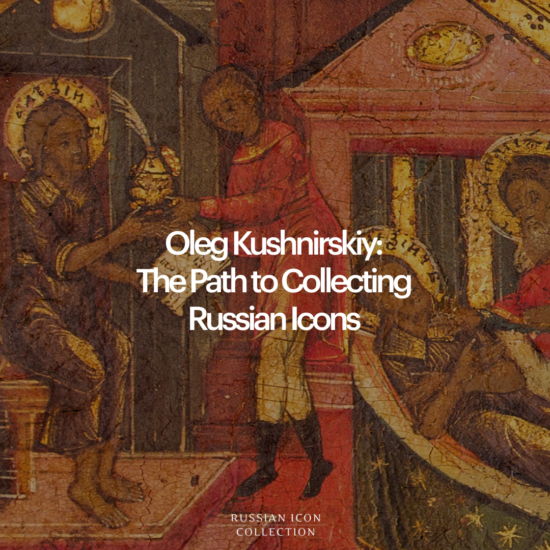
Oleg Kushnirskiy: The Path to Collecting Russian Icons
Though private property that could potentially generate income was strictly limited in the USSR, this arrangement didn’t prevent several notable icon collections from emerging. A prominent example is the Oleg Kushnirskiy collection, which encompasses a wide range of Russian icons from the 17th through the early 20th centuries. Here is a biographical glimpse of Oleg Kushnirskiy’s path to collecting Russian icons, moving to the USA, and popularizing Russian religious art in the 21st century.
Oleg Kushnirskiy on Collecting Russian Icons
Oleg Kushnirskiy’s passion for Russian religious art was forming in highly unfavorable conditions – amid state atheism cultivated in the USSR. Growing up in a community apartment in Leningrad (the present-day St. Petersburg), Oleg was surrounded by antiquity and quickly developed a taste for it.
After receiving a Pharmacy degree, Oleg chose a completely different path by becoming a photographer. He was a student of Grigoriy Zemtsovsky, a legendary photographer who had lost a hand in an explosion but developed unique technical mastery and insight. It was under Zemtsovsky’s guidance that Oleg started photographing works of art at the State Hermitage Museum.
Oleg Kushnirskiy’s interest in religious art was further encouraged by the revival work of Vladimir Soloukhin, who advocated icons and tried to legitimize their collecting. Oleg started touring Russian cities and towns, reaching the Russian North, to find and save unique pieces of icon painting. His travels exposed the drama of icons’ oblivion in a culturally and spiritually rich country, with many gems of religious art being left to rot in abandoned churches, burnt, or appropriated as construction materials.
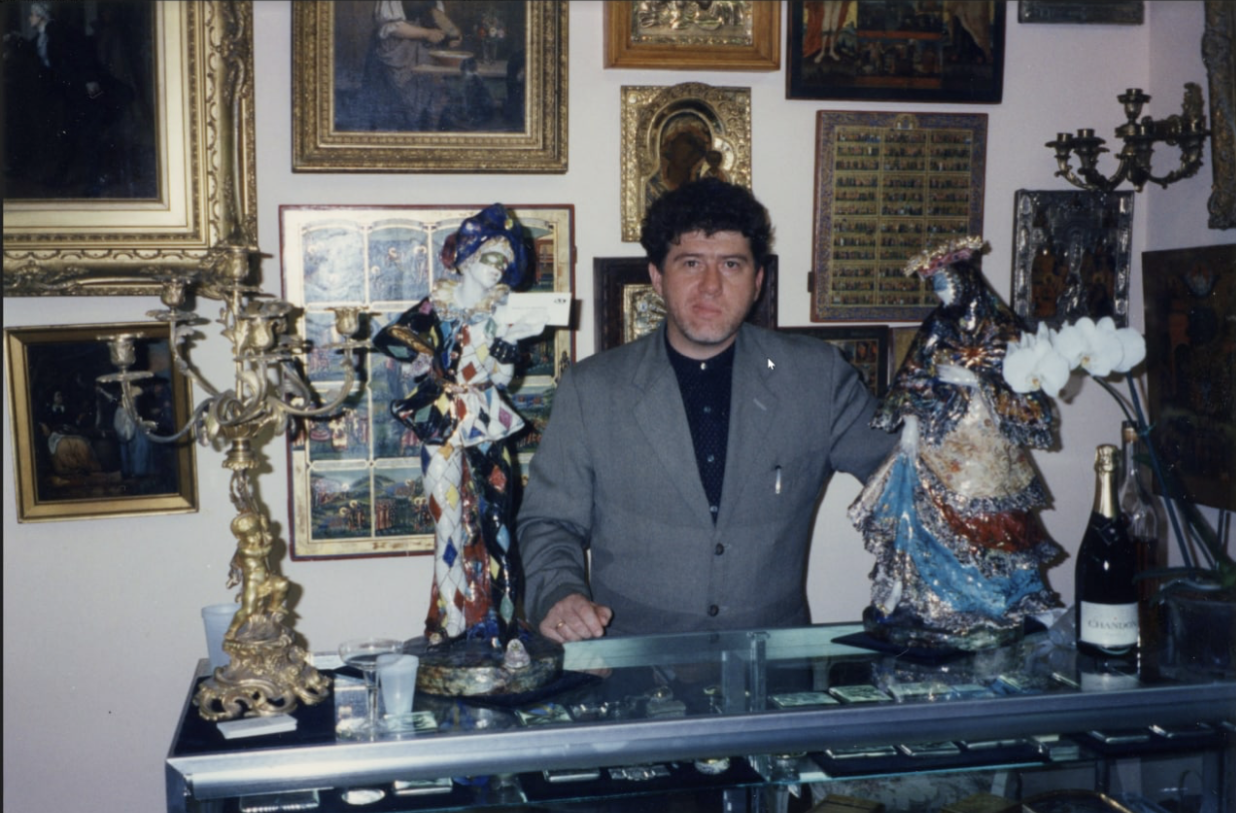
Oleg Kushnirskiy at his gallery and antique shop in New York (40 West, 25 Street). 1990s. The Kushnirskiy family archive.
These tragic encounters solidified Oleg’s intention to save and safeguard Russian icons from disappearance under the Soviet pressure for atheism and the criminalization of icon collecting. In 1992, when Oleg Kushnirskiy was leaving Russia with his family, he was also urged to leave his first collection there. However, during his early years in New York, Oleg set up the Russian Heritage Store in the Chelsea Antique Center and compiled his second collection – the one that reflected his Soviet-period collector interests and became a true testimony to his passion for Russian religious art.
Find Out More in the Exclusive Book
Oleg Kushnirskiy’s path to collecting Russian icons has been exciting in many senses. If you’re interested to learn more about it, the exclusive book with the collection’s catalog and extensive expert commentary is available for sale on our website. Dive deep into the history of private collecting in Soviet times and explore late Russian iconography using this in-depth guide.