
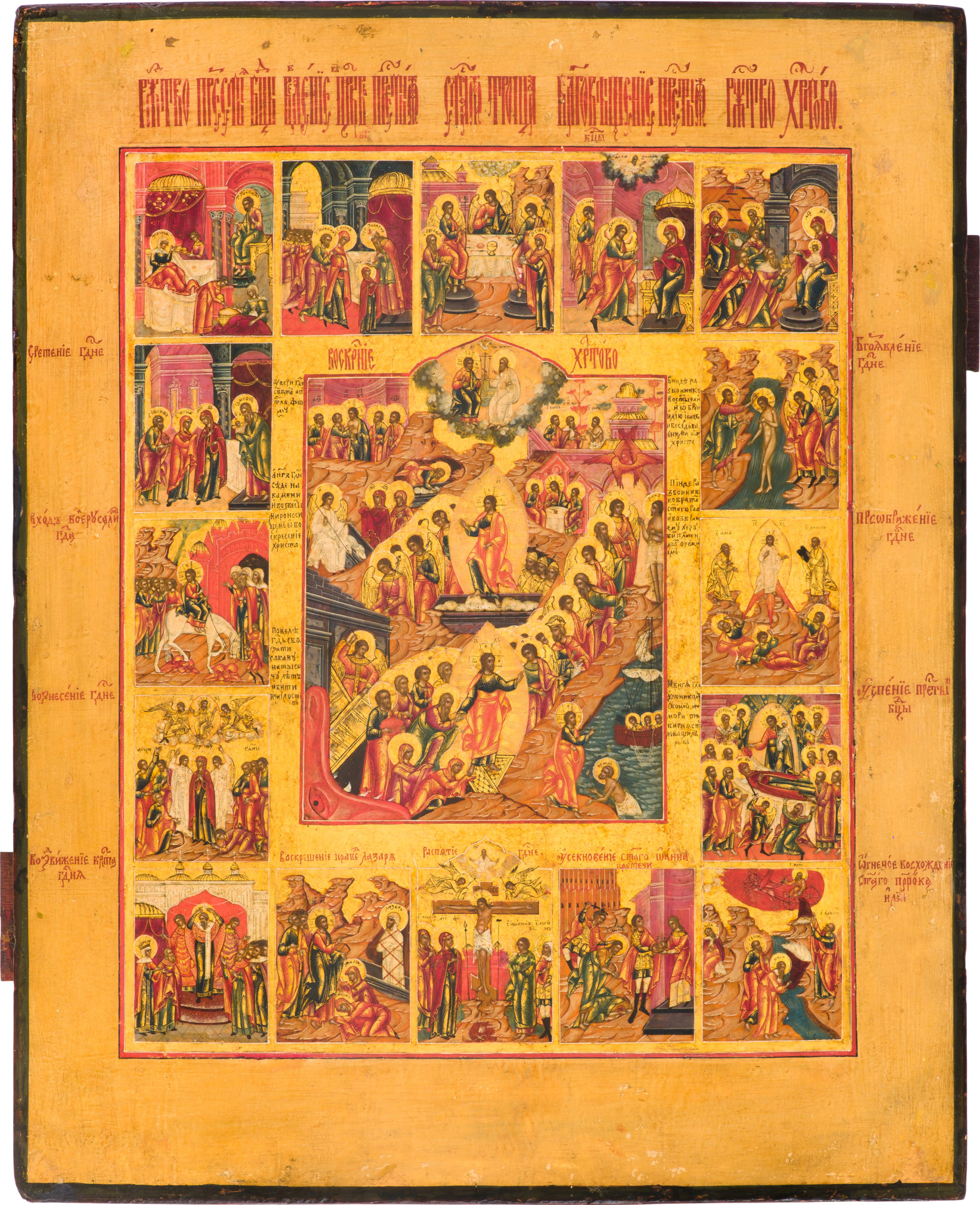
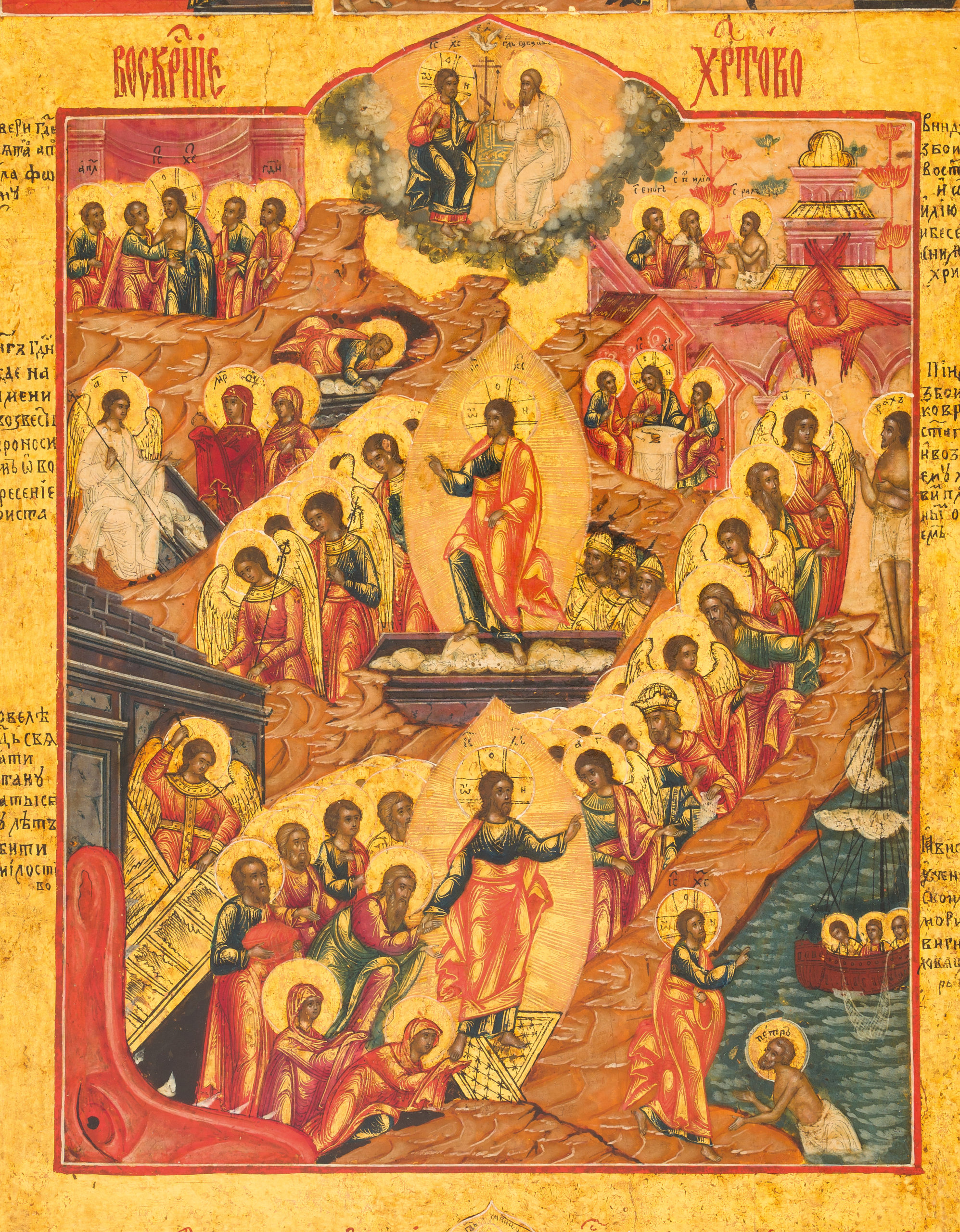
The Resurrection—the Descent into Hell, with Church Feasts in 16 Border Scenes
Icon: middle to third quarter of the nineteenth century. Palekh.
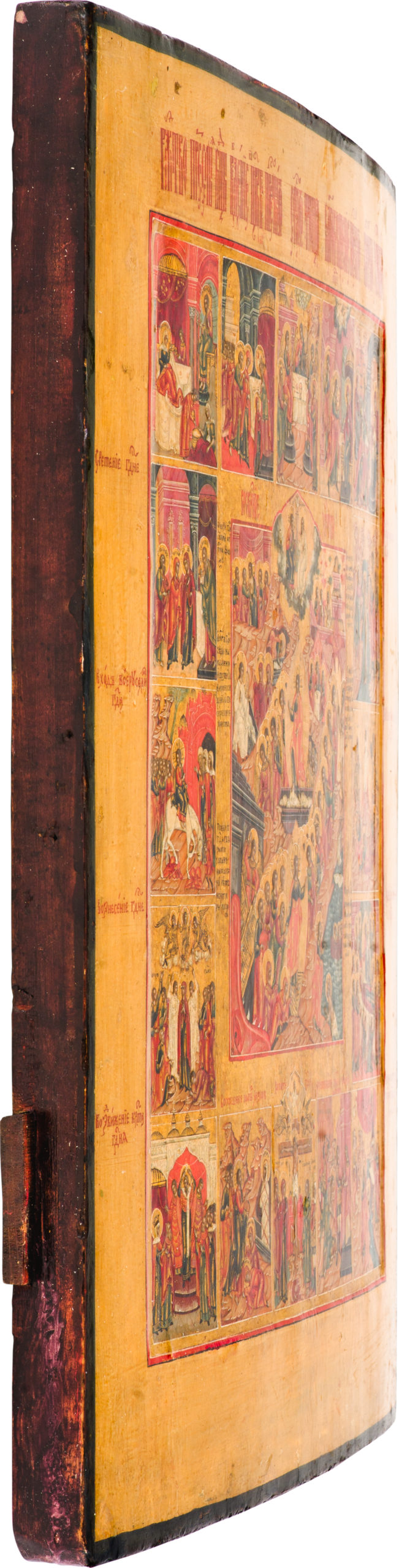
Size: 53 x 43 x 3 cm
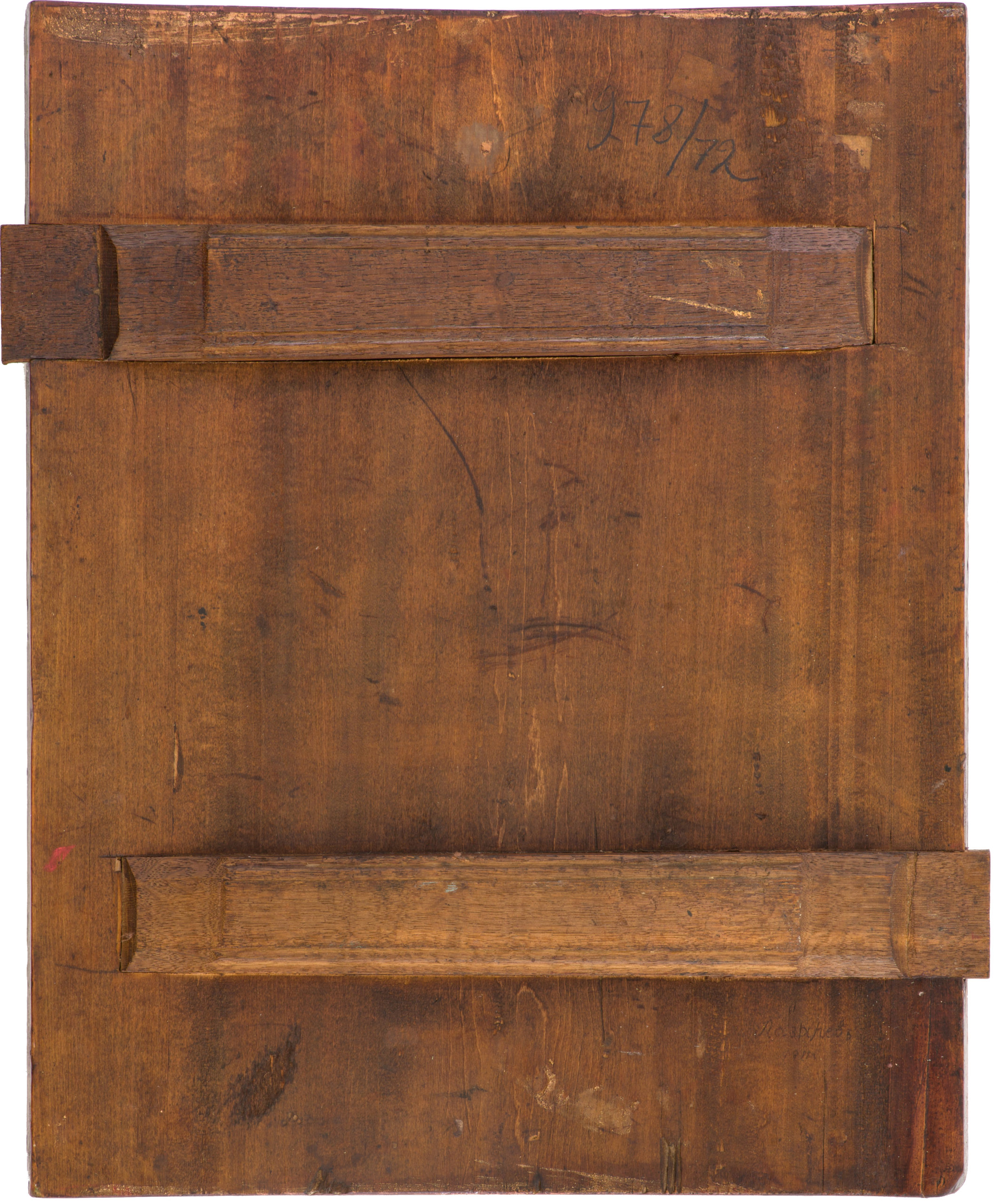
Wood (one whole panel), two incut support boards, an incut centerpiece, underlying layer of canvas is probable, gesso, tempera, gilding.
The author’s paintwork is generally well preserved. There are minor scratches to the paint layer and small chips on the ends of the panel.
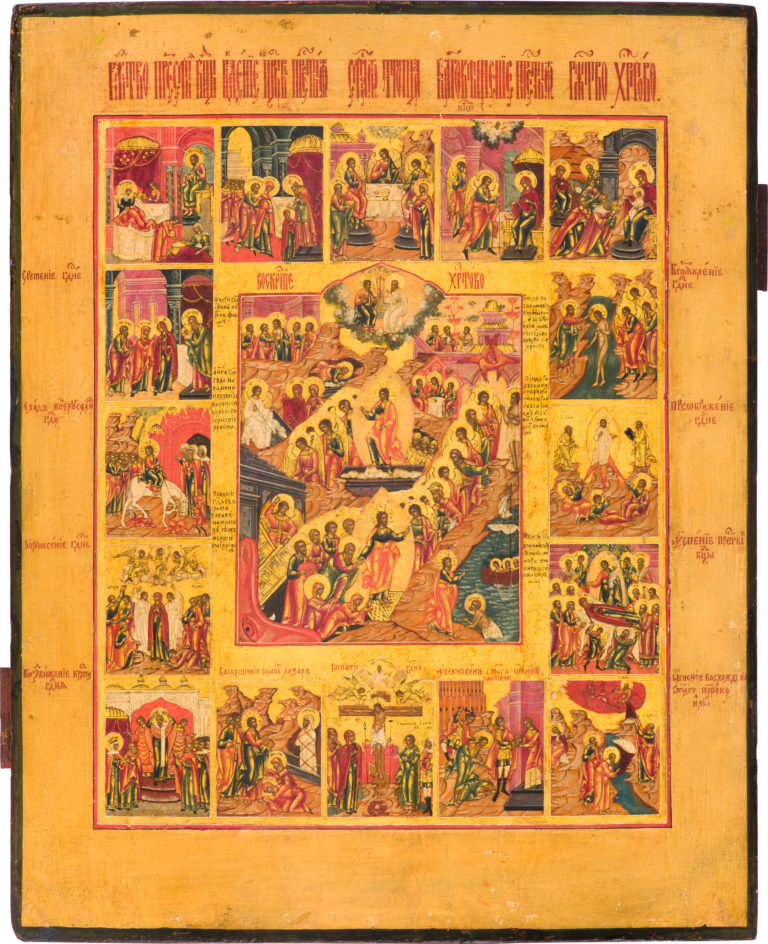
Diagram of the border scenes:
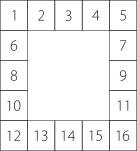
- The Nativity of the Mother of God;
- The Entrance of the Mother of God into the Temple;
- The Old Testament Trinity;
- The Annunciation;
- The Nativity of Christ (The Adoration of the Magi);
- Candlemas (The Meeting of Christ in the Temple);
- The Theophany;
- The Entrance into Jerusalem;
- The Transfiguration;
- The Ascension;
- The Dormition of the Mother of God;
- The Elevation of the Holy Cross;
- The Raising of Lazarus;
- The Crucifixion;
- The Beheading of John the Baptist;
- The Fiery Ascent of the Prophet Elias.
The icon depicts the scene of the Resurrection–Descent into Hell with the Festive Cycle in the border scenes, characteristic of the Palekh tradition.
The iconography, which dates back to the apocryphal Gospel of Nicodemus, brings together the key moments of the Easter events. The Festive Cycle around the perimeter of the centerpiece is built around the central compositional axis, supported by the image of the Trinity in the upper row and ending with the Crucifixion in the lower field. This structure combines the key meanings of Christian history: the suffering, death, and Resurrection of Christ as the source of salvation.
Stylistic features—bright colors, fantasy architecture, character of the painting of the mountains, and general delicacy of the paintwork—allow us to date the icon to the middle to third quarter of the nineteenth century.