
The Avant-Garde and the Icon: A Dialogue Between Tradition and Revolution
The link between icon painting and the Russian avant-garde has long been overlooked in research. “The Avant-Garde and the Icon,” a new exhibition opened at the State Tretyakov Gallery on December 24, 2025, fills this gap by exposing the intricate connections between Russian medieval and public art traditions as a main source of inspiration for the early 20th-century painters. Thoughtfully curated and brought to life by Anastasia Likhenko, the exhibition fosters a dialogue between two key phenomena of Russian art.
Christian Motifs in the Russian Avant-Garde
The link between Russian icon painting and fine art is historically strong. Aleksey Grishenko, an author of the 1917 book titled “Russian icon as an art form,” underlined the central significance of religious iconography in the making of modern Russian art. He observed how many artists, who would soon become world-famous figures in the avant-garde, were raised on the conventions of Orthodox iconography and developed their mastery of composition and color palette based on the available Medieval icons.
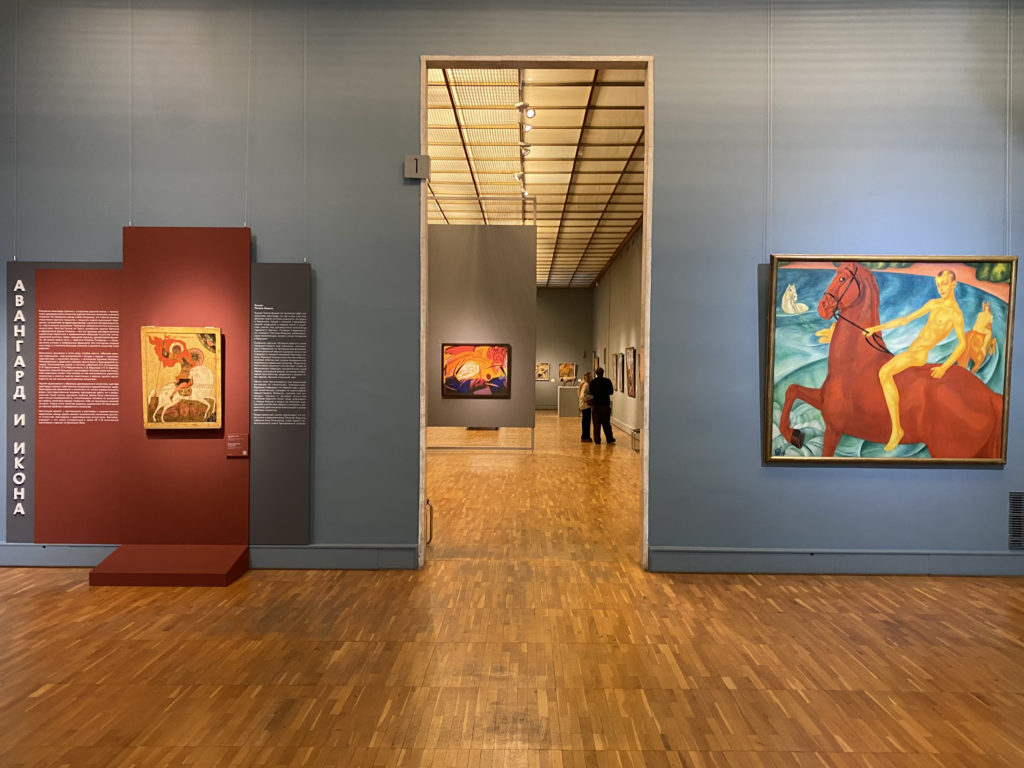
Photo: Igor Volkov
This way, icons served as a culturally and aesthetically vital source of inspiration for further fine art developments, fueling the creativity of such notable artists as Kuzma Petrov-Vodkin, Vladimir Tatlin, Pavel Filonov, Natalia Goncharova, Marc Chagall, Kazimir Malevich, and Vasily Kandinsky. Works by avant-garde painters, presented at the exhibition along with the original icons, make those ties explicit and link Russian art back to its religious roots.
The Avant-Garde and the Icon
“The Avant-Garde and the Icon” at the State Tretyakov Gallery invites visitors to explore the diversity of Russian avant-garde movements, which, in their search for new forms and content in art, turn to examples of Medieval art. The exposition embraces works by Kuzma Petrov-Vodkin, Natalia Goncharova, and Vasily Kandinsky, among others. The curators point out that some of these avant-garde artists even worked in icon painting workshops and received their basic art education there.
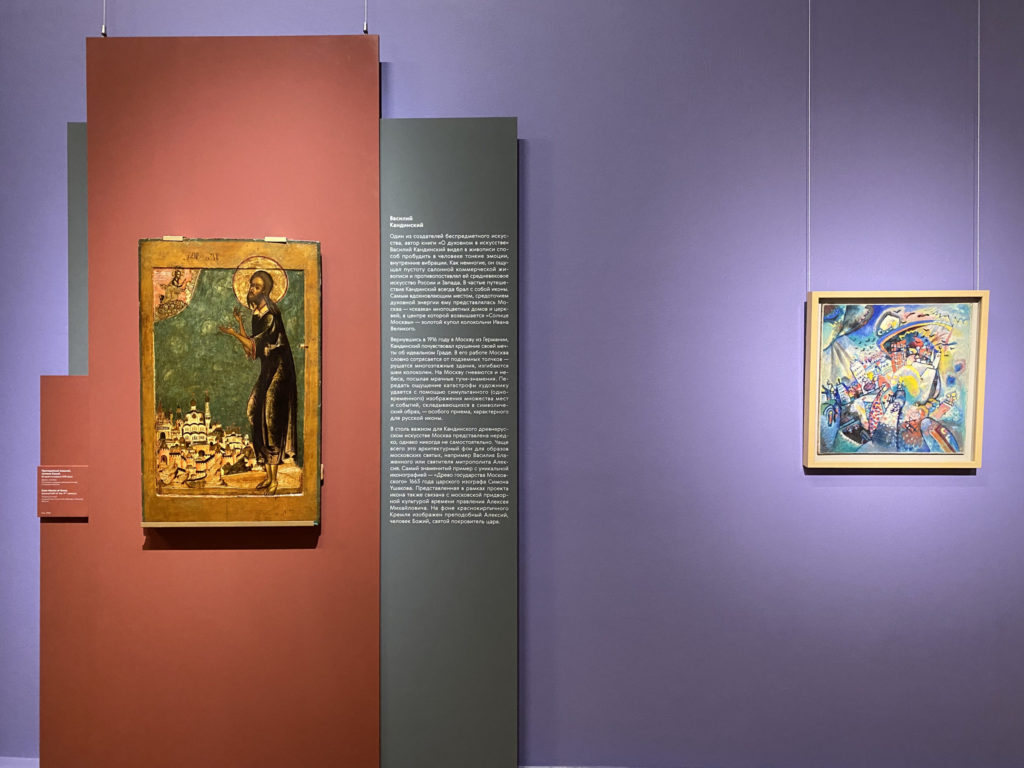
Photo: Igor Volkov
By placing antique Russian icons and avant-garde art side by side, the exhibition traces the use of icons’ expressive language and spatial vision in the new forms of art. Icons used to be part and parcel of every Russian person’s daily routine and a deep element of their national identity, whereas the avant-garde is usually associated with a break with the entire history of art. The exhibition thus offers a unique glimpse of the birth of modern art on the strong foundation of religious painting tradition that shaped the distinctive spirituality of new revolutionary art pieces.
“The Avant-Garde and the Icon” takes place at the New Tretyakov Gallery on Crimean Val, taking the form of a curated route across halls #1, 2, 5, 11, and 13. It is on view through May 11, 2026.