
“A Blessing for the Icon World”: Voices from the Opening of the Oleg Kushnirskiy Collection Exhibition in Clinton
The opening reception for Icons: Old Believers and Their World at the Icon Museum and Study Center in Clinton was more than just a gallery unveiling; it was a global gathering of scholars, collectors, and friends. While the icons shimmered under the gallery lights, the speeches delivered at the event told a story of a son’s devotion to his father’s legacy and the power of art to bridge continents.
Simon Morsink, the museum’s Executive Director, opened the evening by addressing the “miracle” of the gathering. Despite a brutal snowstorm hitting the East Coast, guests had arrived from Russia, Germany, the Netherlands, and different parts of the US.
“Miracles do happen, but only when there’s a miracle worker around. And that is Ilya Kushnirskiy,” Simon Morsink stated. “He is an incredible character, with lots of energy, creativity, and enthusiasm. I think he really is—and I’m serious about this—a blessing for the icon world.”
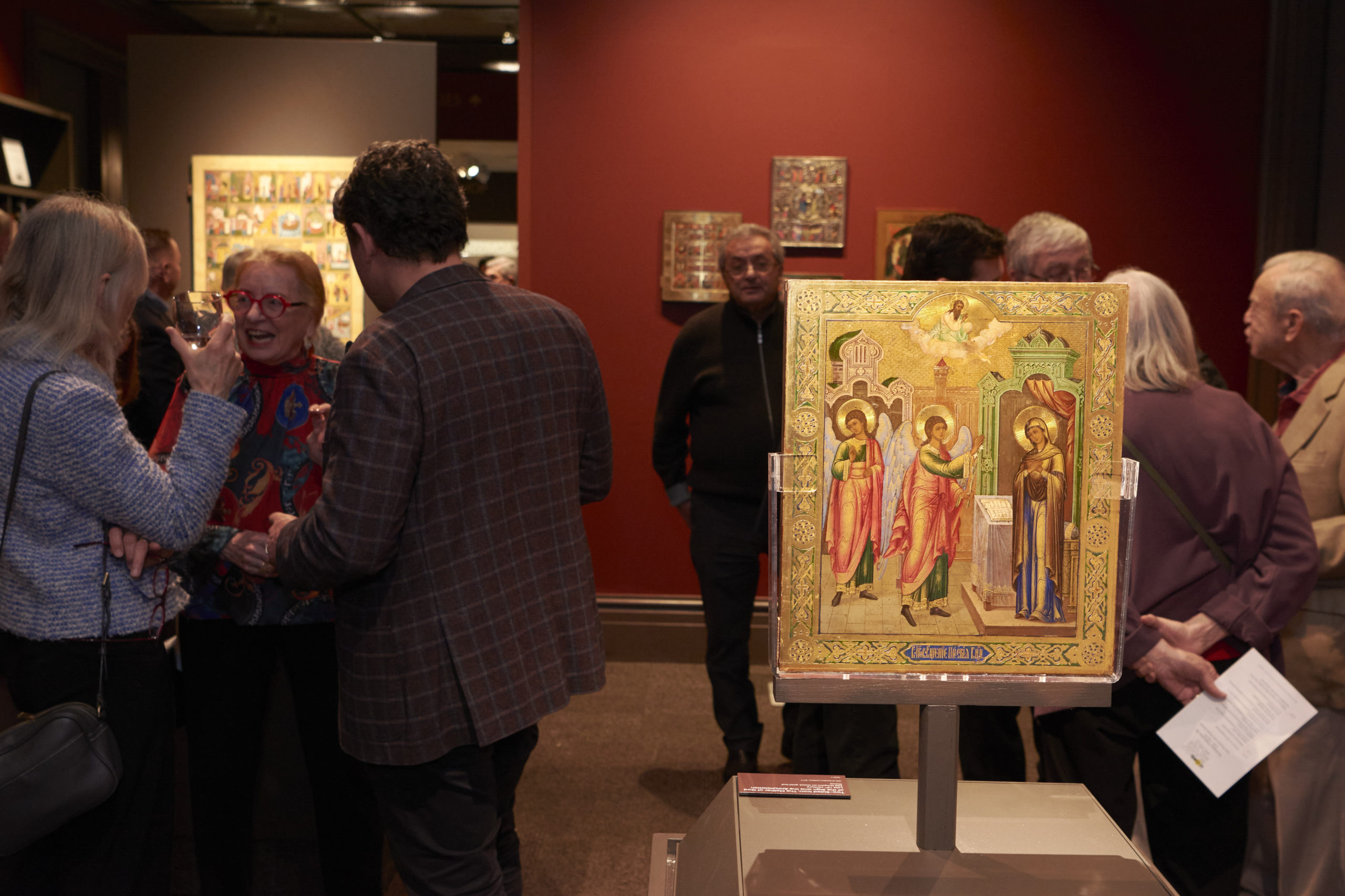
Dr. Wendy Salmond, a leading authority on Russian art, addressed the collection’s rare quality. After talking about the success of the first exhibition of the collection at the Museum of Russian Art in Minneapolis (TMORA), she then focused on the intellectual rigor behind the assembly of these works:
“The more I got to know Ilya… the more I realized that he was really driven by this pure vision of celebrating his father’s passion for icons. He was genuinely invested in the value of this really extraordinary collection… This wasn’t your average ‘chocolate box’ selection. This was highly, highly selected.”
Dr. Salmond emphasized that the Oleg Kushnirskiy collection is unique in its focus, offering a “vetted and connoisseured” look at a specific sliver of history that allows museums to create “a window through which you can understand a really complex, forgotten phenomenon, which is Old Believer visual culture.”
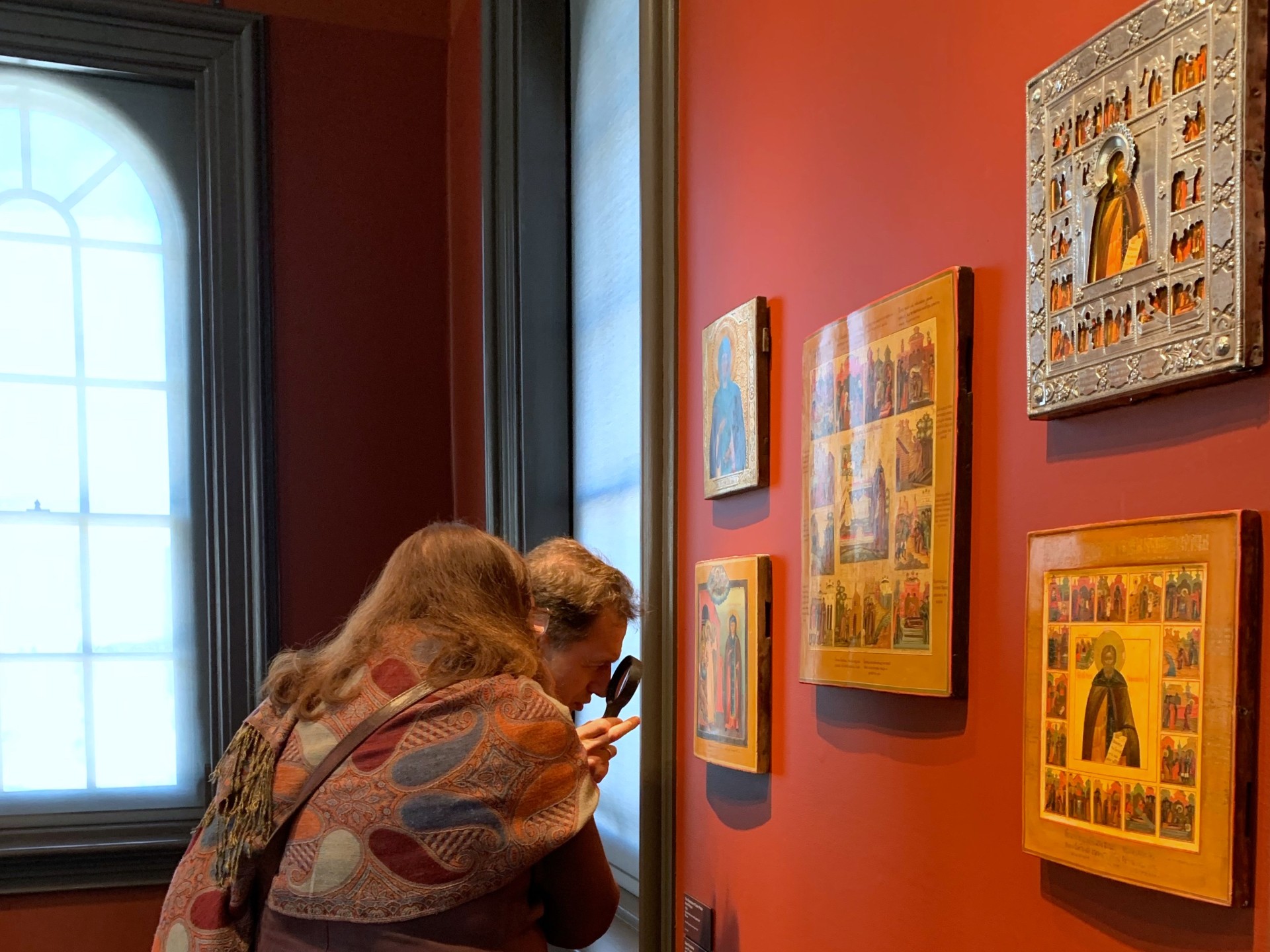
For Ilya Kushnirskiy, the director of the collection, the evening was the fulfillment of his father’s lifelong passion. Ilya recounted the journey from the Chelsea Flea Market in New York, where his father, Oleg, began rebuilding his collection piece by piece after immigrating, to the hallowed halls of the Clinton museum. Eventually, he shared a deeply personal milestone that added a layer of spiritual significance to the event:
“I have something very special to me—this came unexpectedly—but I received a blessing for preserving iconography from the Russian Church. This is very important for me and for my father.”
Konstanze Runge, curator of the Frankfurt Icon Museum, spoke of the profound encounter that occurs before an icon.
“The icon looks back—the saint, Jesus, the Mother of God—they look back, and we look at them. So the function they have not only for believers, but for art historians, for collectors, for historians… as a very beautiful means of communication with the Divine,” Runge remarked.
She highlighted how the icons connect a worldwide community: “Let’s just celebrate that icons can bring us together. They do bring us together. They bridge not only the heavenly and earthly spheres, but also continents. We came from Europe, and we are here now. The icons come from somewhere else.“
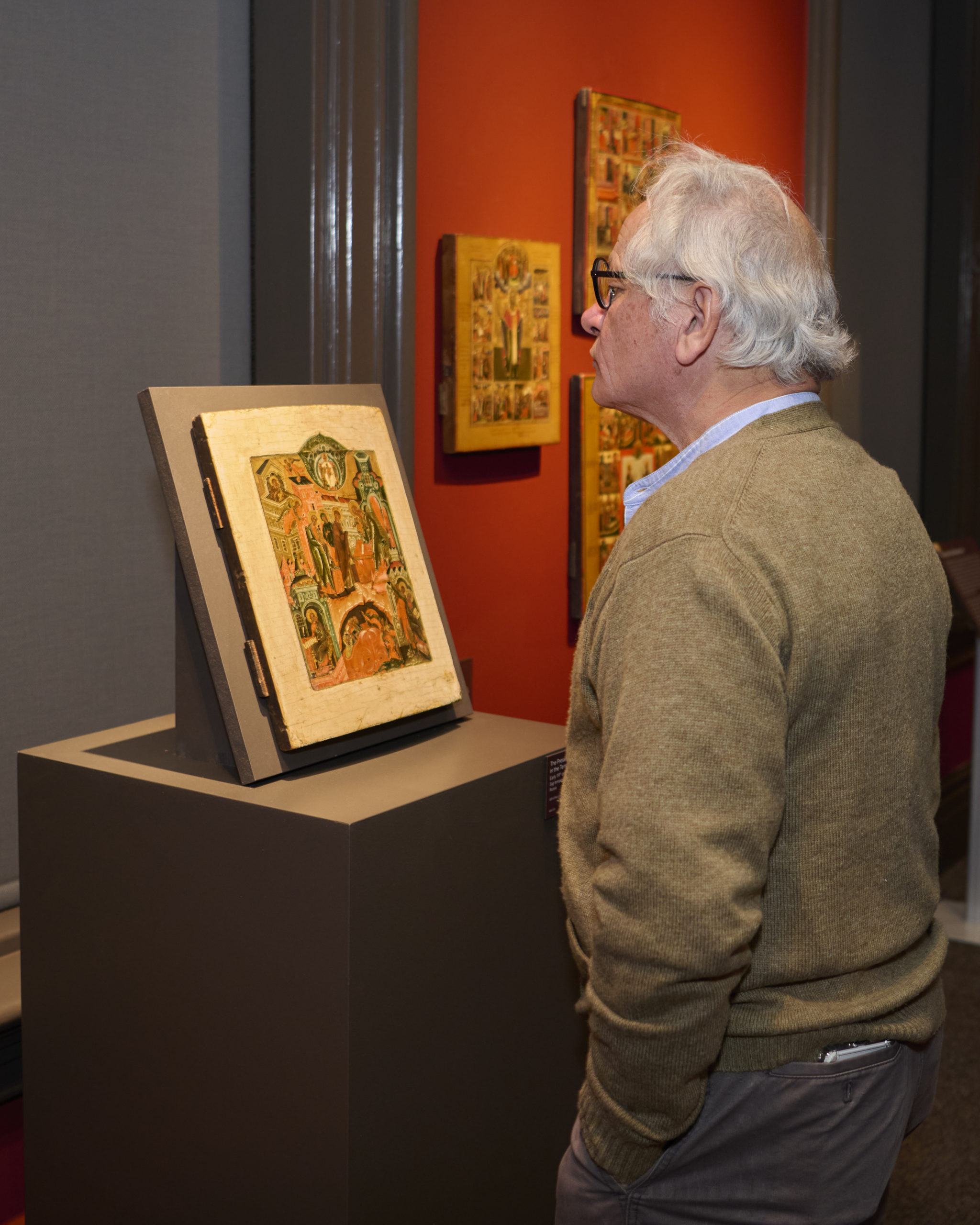
The museum’s curator, Elliot Mackin, provided the scholarly perspective on the exhibition. His speech helped understand how the collection challenges the idea of the 18th and 19th centuries as a period of “decline,” a view inherent in outdated historiography. Instead, through the lens of the Old Believers, the curator presented it as a period of “resurrection.” He credited the “expertise and promoting” of the Kushnirskiys for making it possible to present the 19th-century religious renaissance in such a “brightly colored, intricately detailed” and accessible manner.
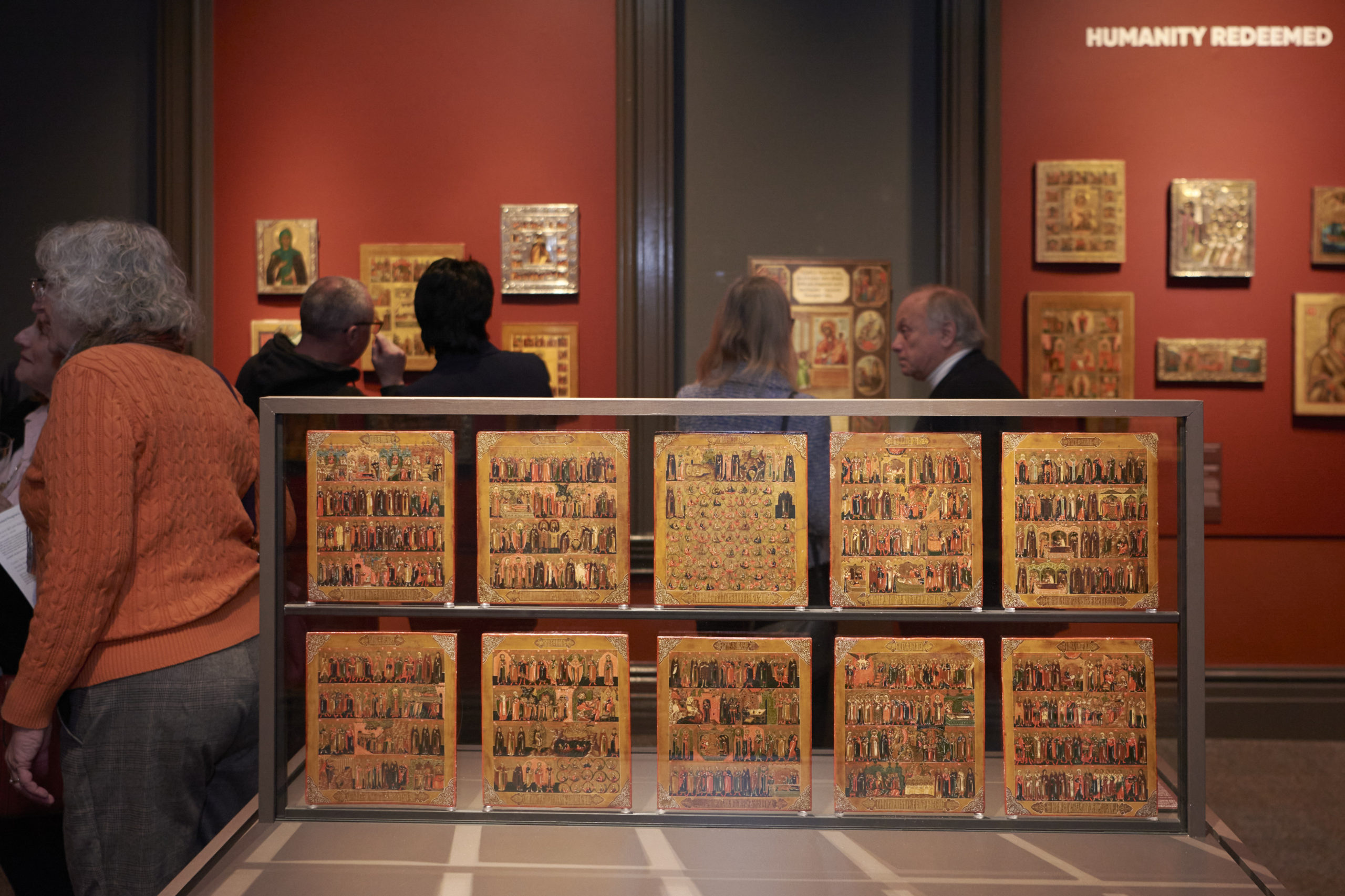
He guided the audience through the three thematic pillars of the show: Humanity Redeemed, which showed how saints served as examples and intercessors for the Old Believers in their own oppression by the state; Time Sanctified, dedicated to icons that depict or accompany the passage of time and demonstrating the role of calendar (Menaion) icons in organizing a world perceived to be in its final days; and All Things Made New, aimed at revealing the social and economic flourishing of Old Believers who became the “cornerstone of the Russian Empire.”
Photos: John Cannon and Danielle Shabo for the Icon Museum and Study Center in Clinton